
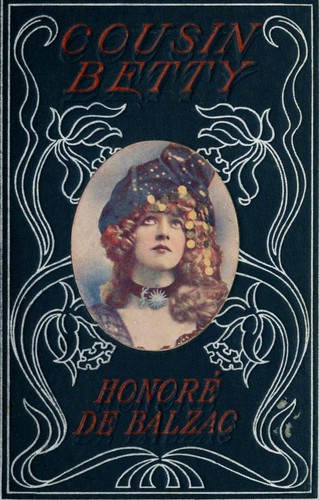
Cousin Bette
Honoré de Balzac · 1799–1850 · France
Originally La Cousine Bette (French)
Why it matters
Balzac's darkest masterpiece: a poor relation's patient, total revenge on the family that slighted her. Envy has never been anatomized more thoroughly: late Balzac at his most ferocious.
At a glance
Large cast and intricate financial schemes require sustained tracking.
Deep dive
A spinster cousin decides to destroy the family that's spent decades being kind to her in exactly the wrong way, and Balzac spends six hundred pages admiring how well she plans it.
Written for readers who have finished the book. No plot recap, and nothing here is safe to read first.
Themes & symbolism
Balzac builds Bette's rage out of decades of small, well-meant humiliations rather than one dramatic injury: her prettier cousin Adeline married up into the Hulot family while Bette stayed the poor relation fed on cast-off dresses and casual condescension, and by the time the novel opens that accumulated resentment has hardened into something closer to a vocation than an emotion. Balzac is explicit that Bette isn't simply jealous of Adeline's beauty, she's jealous of a whole life built on being loved as effortlessly as Bette has never once been, and the distinction matters: Bette doesn't want what Adeline has so much as she wants Adeline to lose it, an aim that requires patience rather than passion.
Baron Hulot's inability to stop pursuing younger mistresses, most ruinously Valérie Marneffe, a courtesan Bette quietly steers toward him and helps manage, gives Bette her actual weapon: rather than attacking the family directly, she lets Hulot's own compulsions do the demolition and simply keeps supplying him the means and the introductions. Valérie herself is one of Balzac's most efficient portraits of calculated seduction, running Hulot and several other men simultaneously purely for the money each believes he alone is providing, and Balzac never asks readers to find her more monstrous than the men financing her; her greed is just theirs with better bookkeeping.
Bette's other motive runs through Wenceslas Steinbock, the impoverished Polish sculptor she rescues from suicide, feeds, and quietly grooms as a kind of surrogate husband in every way but the physical, only to watch Hulot's daughter Hortense fall for him and marry him within the same season. Balzac treats this loss as the second half of Bette's engine alongside the family's condescension: having been denied a claim on Wenceslas she never openly made, Bette redirects the same possessive energy into ensuring the family that took him from her pays for it in full, over years, with a patience Balzac keeps insisting is itself a kind of genius.
Money Standing In for Everything Else
Crevel, the vain former perfume merchant who competes with Hulot for Valérie's attention and eventually marries her, is one of dozens of characters Balzac carries across multiple novels in La Comédie Humaine, and Cousin Bette assumes a reader who already half-knows him from elsewhere, part of Balzac's larger project of building one continuous social world rather than isolated books. The novel's real subject, underneath the melodrama, is money moving through Parisian society along exactly the channels sex and family loyalty pretend to be separate from it: Hulot embezzles from the war ministry to keep Valérie in style, Crevel's fortune buys him a courtesan a younger, poorer man couldn't afford, and Bette's revenge succeeds specifically because she understands, better than anyone else in the book, how completely love among the Hulots runs on credit.
The last seal: what actually happens, and why it lands the way it does.
The ending, explained
Bette dies of consumption without ever confessing her engineered role in the family's ruin, and the other characters go to their graves, or their diminished lives, without fully grasping how deliberately she built their catastrophe rather than merely enjoying it as it happened. Valérie dies horrifically of a disease contracted from a rival lover, Crevel dies of the same illness caught from her, and Hulot, rather than being reformed by any of it, is discovered in the final pages having set up house with an illiterate kitchen servant, his compulsion entirely undiminished by ruin, disgrace, or age. Balzac's last image, the patient, loyal Adeline collapsing with shock at catching her husband again, mid-affair, makes the book's final argument as bleak as its opening one: nothing in this family's structure was ever going to correct itself, with or without Bette's help.
Where to go next
 Honoré de Balzac · 1831The Wild Ass's SkinLvl 5Fast paced
 Honoré de Balzac · 1832Colonel ChabertLvl 3Medium pace
 Honoré de Balzac · 1833Eugénie GrandetLvl 3Medium pace
 Honoré de Balzac · 1835Père GoriotLvl 4Medium pace
 Honoré de Balzac · 1837Lost IllusionsLvl 5Medium pace
 Honoré de Balzac · 1842The Black SheepLvl 5Medium pace