

Colonel Chabert
Honoré de Balzac · 1799–1850 · France
Originally Colonel Chabert (French)
Why it matters
A colonel presumed dead at Eylau returns years later to find his fortune seized and his widow remarried and unwilling to know him: Balzac's shortest, bleakest work, a novella about how completely the living can erase the dead.
At a glance
Short and tightly focused: a fast, unambiguous novella.
Deep dive
A cavalry colonel presumed dead in a mass grave at Eylau turns up alive a decade later at a Paris law office, and proving what happened on the battlefield is easier than convincing anyone it should matter now.
Written for readers who have finished the book. No plot recap, and nothing here is safe to read first.
Themes & symbolism
Chabert's real opponent isn't his widow so much as the Napoleonic Code's own finality: once a death certificate exists, there is, legally, no path back to personhood no matter what the body standing in the doorway can prove. Balzac builds the novella around that specific horror, a man whose actual survival counts for less in Restoration France's paperwork than the fiction the state already recorded, and Chabert's slow realization of how little his living presence outweighs a registry entry is what turns a war story into a legal tragedy.
Rosine, now the Comtesse Ferraud, has spent the ten years since Eylau building an entire second life and social position on Chabert's death, and her initial performance of not recognizing her own husband is calculated rather than confused, a woman protecting a fortune by simply declining to know what her eyes tell her. Derville, the lawyer Chabert hires, functions as the reader's own shifting skepticism made into a character, moving from doubt to conviction as Chabert supplies details, a scar, a specific memory, that only the real colonel could know, which raises the novella's real question of what proof of identity is even worth once an institution has already decided the matter.
Chabert's account of clawing himself out from under a pile of corpses at Eylau, half-buried alive after being struck down and left for dead, gives Balzac a second birth to set against the first: a man who survives his own burial only to discover the living world has no legal mechanism for readmitting him. The detail also carries a wider argument Balzac returns to elsewhere in the Comédie humaine, that Restoration France abandoned its Napoleonic veterans as thoroughly as any battlefield ever did.
Eylau's Grave Pit and a Second, Quieter Burial
The actual Battle of Eylau in 1807 was among the bloodiest engagements of the Napoleonic Wars, fought in driving snow with casualties piled indiscriminately, and Balzac uses that specific, documented brutality to ground Chabert's escape in something closer to reportage than melodrama. The novella's real subject only becomes visible afterward: Eylau nearly kills Chabert once, quickly and violently, while Restoration Paris kills him again, slowly, through paperwork and a wife's convenient forgetting.
The last seal: what actually happens, and why it lands the way it does.
The ending, explained
When Rosine tries to trick Chabert into signing a document that would formally extinguish his own legal claim to his identity and property, he abandons the case entirely rather than keep fighting a system that has already made up its mind about him, and simply vanishes into poverty. Derville encounters him again only by chance, years later, in the courtyard of Bicêtre, a public poorhouse, where the once-decorated colonel is registered and addressed not by his name but by an inmate number, the novella's final image confirming, without further comment, exactly how completely the living erased him.
Where to go next
 Honoré de Balzac · 1831The Wild Ass's SkinLvl 5Fast paced
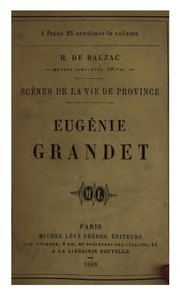 Honoré de Balzac · 1833Eugénie GrandetLvl 3Medium pace
 Honoré de Balzac · 1835Père GoriotLvl 4Medium pace
 Honoré de Balzac · 1837Lost IllusionsLvl 5Medium pace
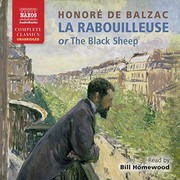 Honoré de Balzac · 1842The Black SheepLvl 5Medium pace
 Honoré de Balzac · 1846Cousin BetteLvl 5Medium pace