
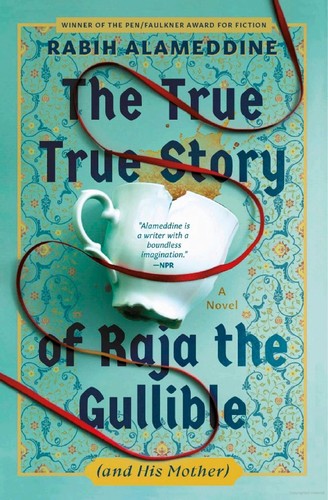
The True True Story of Raja the Gullible (and His Mother)
Rabih Alameddine · b. 1959 · Lebanon / United States
Why it matters
A hapless son's account of his own credulity tangles with his formidable mother's schemes and half-truths, comedy shadowed by Lebanon's long unraveling. Alameddine's National Book Award winner is unreliable narration and family myth-making at their most entertaining.
At a glance
Self-interrupting, digressive narration plays games with its own reliability.
Deep dive
Why a sixty-three-year-old philosophy teacher, offered a way out of Beirut and his mother's apartment at last, spends his last night before leaving nesting one story inside another instead of simply packing his bags.
Written for readers who have finished the book. No plot recap, and nothing here is safe to read first.
Themes & symbolism
Raja teaches philosophy in Beirut and shares a cramped apartment with his eighty-five-year-old mother Zalfa, whose appetite for the details of his private life he treats as a lifelong siege. When an all-expenses-paid writing residency in the United States arrives, seemingly a clean exit from both his mother and a country that keeps handing him new catastrophes, Alameddine does not let Raja simply take it. Instead the novel becomes the story Raja tells himself, and eventually his mother, on the way to deciding whether to go, and that detour is the book: a set of stories folded inside other stories, each one a stall against the plainer, harder account underneath it, including two months spent as a hostage during the 1975 civil war, held by an acquaintance whose captivity curdles into something closer to a strange, coerced intimacy than the plot Raja would prefer to tell about it.
Zalfa's own history, her habit of turning up at antigovernment protests decades after she is supposed to have outgrown that kind of risk, gives the novel's mother-son standoff a second register: her nosiness about Raja's private life reads, underneath the comedy, as a woman who has outlived a war, a currency collapse, and a port explosion insisting on knowing at least the interior life of the one person she has left. Alameddine stacks six decades of Lebanese catastrophe, the 1967 war, the fifteen-year civil war, the 2019 banking collapse, Covid, the 2020 Beirut blast, directly onto this one household's kitchen-table arguments, refusing to let any single disaster stand alone as the explanation for who Raja and Zalfa have become.
Storytelling as the Only Available Weapon
Raja's constant narrative evasions, digression as a way of postponing the residency decision and the reckoning underneath it, are never treated by Alameddine as a flaw to be corrected. The nested, accordion structure, short bracketing chapters set in 2023 folded around the accumulated stories of everything that came before, makes the telling itself the survival strategy: a man who has been kidnapped, buried lovers, and watched his savings evaporate overnight has good reason to prefer narrating his life to living through it a second time in memory.
A Residency Letter That Refuses to Stay Simple
The invitation that could free Raja from Beirut functions less as plot engine than as a mirror: every time the novel returns to the letter sitting unanswered, it is measuring how much of Raja's paralysis is actually about his mother and how much is about a country he has spent his adult life narrating rather than leaving. Alameddine keeps the letter open rather than resolved through most of the book, which is what makes the novel's comedy, sardonic and self-lacerating, run directly alongside its catalog of disasters rather than arriving only after them.
Where to go next
 A. M. Homes · 2012May We Be ForgivenLvl 5Fast paced
 Annie Ernaux · 2008The YearsLvl 6Slow burn
 John Irving · 1978The World According to GarpLvl 4Fast paced
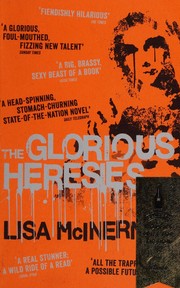 Lisa McInerney · 2015The Glorious HeresiesLvl 6Medium pace
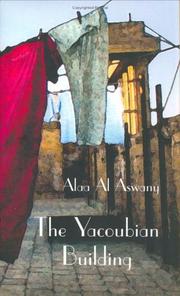 Alaa Al Aswany · 2002The Yacoubian BuildingLvl 4Fast paced
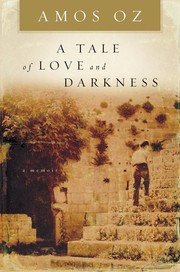 Amos Oz · 2002A Tale of Love and DarknessLvl 6Slow burn