
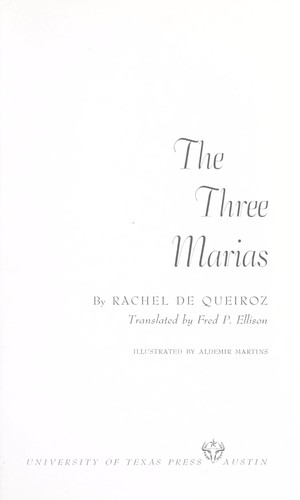
The Three Marias
Rachel de Queiroz · 1910–2003 · Brazil
Originally As Três Marias (Portuguese) · translated by Fred P. Ellison
Why it matters
Three convent-school friends, all named Maria, come of age together in provincial Ceará, then watch adulthood pull them toward very different fates neither friendship nor faith prepared them for. Queiroz's early feminist bildungsroman, written before she was thirty.
At a glance
A linear coming-of-age narrative told in clear, unadorned prose.
Deep dive
Three girls nicknamed for a constellation grow into three entirely different kinds of adult womanhood, and Queiroz refuses to rank which of them chose correctly.
Written for readers who have finished the book. No plot recap, and nothing here is safe to read first.
Themes & symbolism
A nun at their convent school in Fortaleza nicknames Guta, Maria José, and Maria da Glória the Três Marias after the Portuguese name for Orion's belt, three stars that look inseparable from the ground and are nothing of the kind, unrelated points an observer has simply decided to connect. Queiroz builds the whole novel on that quiet irony: the girls' school-age closeness reads as fate while they're still confined to the same dormitory, and dissolves almost the moment adult life gives each of them a separate trajectory to follow.
Maria José commits to a strict, joyless piety, scandalized when she learns her old schoolmates have broken the sixth commandment; Maria da Glória marries young and has a child, getting exactly the domestic life she was raised to want. Guta, narrating throughout and closest to Queiroz's own biography, wants neither. She takes work as a typist rather than return to farm life as a wife, falls for a married man, Raul, and refuses the arrangement he offers her as a mistress rather than a wife, a refusal the novel treats as principled rather than merely proper. When her friend Aluísio, whose feelings for her she never returns, takes his own life, Guta absorbs the town's blame for it without the narrative ever fully deciding whether she deserves it, which is the book's harder argument: a woman can refuse every available role correctly and still be made to answer for outcomes that were never really hers to control.
Orion's Belt as a Friendship's Real Shape
The convent nickname does more work than a passing joke. A constellation is a pattern imposed from one particular vantage point, not a real relationship between its stars, and Queiroz lets that hold for the friendship itself: the intimacy that felt permanent inside the school's shared routines turns out to have been contingent on proximity the whole time, and once the girls scatter into marriage, devotion, and independence, the three-Marias unity the book's title advertises is revealed as something the reader, like the young nun, was only ever seeing from one fixed angle.
The Woman Neither Path Was Built For
Guta is close enough to Queiroz's own early career as a journalist working outside the roles Brazilian society scripted for women that the novel reads as a kind of argument by example: neither Maria José's renunciation nor Maria da Glória's marriage is treated as a failure, but neither is treated as sufficient either, and Guta's own restlessness, wanting work, wanting romantic feeling without a marriage contract attached, is given the same narrative seriousness without ever being rewarded with an easy resolution. Queiroz, writing in her twenties, refuses to pretend she already knows which choice a young Brazilian woman in 1939 should make.
The last seal: what actually happens, and why it lands the way it does.
The ending, explained
By the novel's last pages the three friends have fully diverged. Maria da Glória, married off early with such certainty, ends up abandoned by her husband Afonso and effectively alone. Maria José settles into marriage with Lucas, the pious path resolving into an ordinary one after all. Guta travels to Rio de Janeiro on a brief leave from work and falls for Isaac, a foreign doctor, in the one real romantic connection the novel grants her, only to run out of money and leave before anything can be settled between them. On the train back to Fortaleza she carries four of his unanswered letters in her bag, asking herself what good written words actually do. Queiroz ends on that unresolved question rather than a verdict, leaving Guta's future as open as her past choices were principled.
Where to go next
 Rachel de Queiroz · 1930The FifteenLvl 3Medium pace
 Graciliano Ramos · 1938Barren LivesLvl 6Slow burn
 Jorge Amado · 1958Gabriela, Clove and CinnamonLvl 3Fast paced
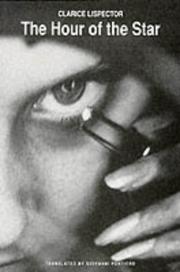 Clarice Lispector · 1977The Hour of the StarLvl 7Slow burn
 João Guimarães Rosa · 1956The Devil to Pay in the BacklandsLvl 9Slow burn
 Ricardo Güiraldes · 1926Don Segundo SombraLvl 5Medium pace