
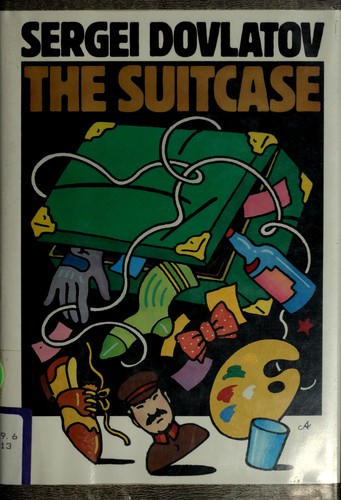
The Suitcase
Sergei Dovlatov · 1941–1990 · USSR / USA
Originally Chemodan (Russian)
Why it matters
Each item in the narrator's single emigration suitcase (a suit, some boots) unspools into a deadpan story of Soviet absurdity. Dovlatov's compressed, comic exile prose at its most perfectly controlled.
At a glance
Short, deadpan, tightly controlled anecdotes with plain sentence-level construction.
Deep dive
Eight worthless objects packed for emigration in 1978, each one unpacking into a small absurd story of how Soviet life actually worked, and why the narrator can't bring himself to throw any of them away.
Written for readers who have finished the book. No plot recap, and nothing here is safe to read first.
Themes & symbolism
Dovlatov's frame is exact: leaving Leningrad for the West, he's allowed one suitcase, and customs confiscates anything of genuine value on the way out, so what survives the border is eight items with no resale worth at all, a pair of socks, a belt, a jacket, each one triggering a chapter about the absurd chain of favors, bribes, and luck that got it into his possession in the first place. 'A Decent Double-Breasted Suit' follows an ill-fitting suit won off a factory director in a drunken bet and worn, badly, to look presentable for a state occasion it was never built for; 'An Officer's Belt' traces back to his own compulsory military service guarding a prison camp, a job he took not from conviction but from having nowhere else to go.
'Fernand Léger's Jacket' is the collection's sharpest joke: a black-market dealer sells him a coat supposedly once owned by the French painter, provenance he half-believes because half-believing it is more fun than checking, and Dovlatov lets the reader see exactly how badly he wants the story to be true. Across all eight chapters, the actual objects matter far less than what acquiring them required, favors called in, small deceptions, minor humiliations willingly absorbed, a comic inventory of what it cost to survive inside a system organized around chronic scarcity.
The Suitcase as an Unreliable Inventory
Dovlatov undercuts his own authority as narrator throughout, admitting when a story has grown taller in the retelling or when he can no longer be sure which version actually happened, so the suitcase functions less as documentary evidence than as a prompt for improvisation. The comedy depends on that instability: an object this ordinary earns its story only because Dovlatov is willing to embellish it into one.
A Black Market Built on Believing the Provenance
The Léger jacket's backstory, sold to him with total confidence by a dealer who almost certainly invented it, stands in for how Soviet scarcity generated its own parallel economy of desirable fictions: an ordinary coat becomes valuable the moment someone agrees to believe a good enough story about where it came from, the exact inversion of how value is supposed to work.
The last seal: what actually happens, and why it lands the way it does.
The ending, explained
The book's frame closes years later in New York, where the suitcase has sat unopened in a closet long enough that his wife wants it gone. Dovlatov finally opens it, expecting junk, and finds exactly that, worthless Soviet objects that mean nothing to anyone else in his new country. But he keeps the suitcase rather than discarding it, concluding that these eight absurd, humiliating, small acquisitions are the only complete and honest record he has of who he was for thirty-six years, more accurate than any official document the state would have written about him. The frame's closing joke is also its real claim: junk, examined closely enough, turns out to be the most reliable autobiography available.
Where to go next
 Svetlana Alexievich · 2013Secondhand TimeLvl 4Medium pace
 Vladimir Sorokin · 2006Day of the OprichnikLvl 5Fast paced
 Venedikt Yerofeev · 1970Moscow-PetushkiLvl 7Fast paced
 Ivan Bunin · 1943Dark AvenuesLvl 4Medium pace
 Yuri Olesha · 1927EnvyLvl 7Medium pace