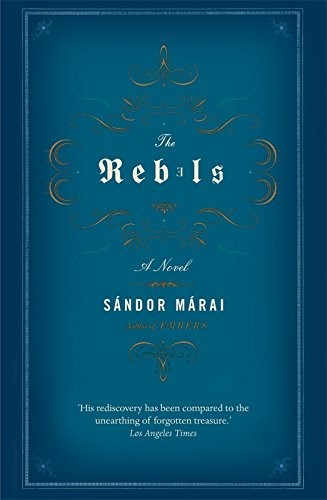
The Rebels
Sándor Márai · 1900–1989 · Hungary
Originally A zendülők (Hungarian)
Why it matters
Five schoolboys on the edge of conscription into the First World War build a secret hideout and a private code of rebellion against the adult world about to consume them. Márai's early novel of doomed youth and vanishing innocence.
At a glance
A tightly focused group portrait, more accessible than Márai's later, denser work.
Deep dive
Five boys just out of school spend a summer stealing from their own families to fund one last stretch of freedom before the war that is coming for all of them, and Márai lets the war stay entirely offstage.
Written for readers who have finished the book. No plot recap, and nothing here is safe to read first.
Themes & symbolism
Ábel and his four classmates have just finished secondary school in a small provincial Hungarian town during the last year of the First World War, with conscription waiting for every one of them the moment the formality of graduation is behind them, and Márai spends the novel inside the strange, suspended interval this creates: too old for childhood, too briefly free for adulthood, with the front close enough that its outcome for each of them is not really in question. The boys form a private society funded by petty theft from their own households, pawning heirlooms and small valuables to bankroll a secret room where they can drink, perform, and act out a version of the freedom the adult world has never actually offered them.
Amadé, an itinerant actor the boys befriend, embodies everything their own fathers, provincial notaries and officials, do not: a life lived without a fixed post, without the deference to institutions the town's adults have spent their careers performing. Márai draws the boys' fascination with him as a specifically adolescent confusion of danger with liberation, since Amadé's attention to the group carries an undertow of exploitation the boys are only beginning to be able to name, and the theft that funds their little society starts to look, by the novel's second half, less like rebellion than like a rehearsal for the exact kind of moral compromise their fathers have already made peace with.
A War Kept Entirely Off the Page
Márai never sends his readers to the front, never narrates a battle or a casualty list; the war exists in The Rebels only as the appointment none of the boys can avoid, a deadline hanging over a summer of stolen watches and borrowed costumes. That restraint is the novel's real subject rather than an omission: a generation raised in a provincial town whose entire adult apparatus, family, school, church, has organized itself around sending its young men off with no plan for what happens to the ones who survive, let alone the ones who don't.
Theft as the Only Currency a Minor Has
Every object the boys pawn belongs first to a parent, a small domestic betrayal Márai treats with more moral seriousness than the larger, sanctioned betrayal of sending them to war unasked. The novel's persistent joke, that boys about to be legally entitled to kill strangers for their country are still treated as children unfit to be trusted with the family silver, is never delivered as a joke; it simply sits there, the adult world's contradictions laid out without commentary.