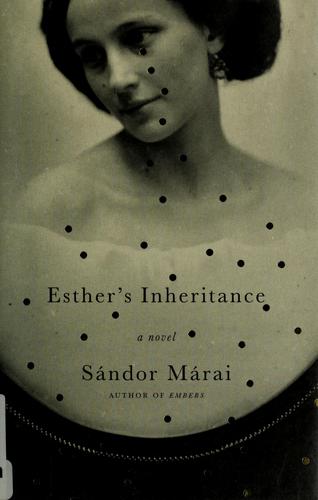
Esther's Inheritance
Sándor Márai · 1900–1989 · Hungary
Originally Eszter hagyatéka (Hungarian)
Why it matters
Decades after Lajos swindled and humiliated her family, an aging Esther waits once more for his return, already knowing exactly how he will deceive her again. Márai's shortest and coldest anatomy of an attachment that outlives every betrayal it survives.
At a glance
A brief, single-sitting character study, the most compact entry point into Márai's world.
Deep dive
A woman who was jilted decades ago for her own sister spends one afternoon receiving the man who did it, and Márai lets her decide, with her eyes fully open, exactly how much of herself she is willing to hand him this time.
Written for readers who have finished the book. No plot recap, and nothing here is safe to read first.
Themes & symbolism
Eszter has lived quietly for years with her companion Nunu when Lajos, the charming, chronically dishonest man who once courted her before marrying her late sister Vilma instead, announces he is coming to visit, ostensibly to make amends and repay old debts. Márai compresses the entire novel into the span of that single visit, and Eszter's retrospective narration makes clear from the first pages what the town has apparently never learned about Lajos in decades of watching him operate: he does not need to lie outright to take what he wants, only to let people's own hopes about him do the work of deception.
What Lajos actually extracts over the course of the afternoon, a valuable ring, effective control of Eszter's house, is almost incidental to the novel's real interest, which is the precision with which Eszter watches herself allow it. She is not a woman deceived; she is a woman who has finally understood the man well enough to know exactly what letting him take everything will cost, and chooses, consciously, to pay it anyway, a final settling of an account that has been open since her youth. Nunu, watching from the margins of nearly every scene, represents the alternative Eszter never took, a life organized entirely around practical self-preservation, and Márai lets the two women's very different survivals sit side by side without ranking one above the other.
A Swindler Who Never Has to Lie
Márai builds Lajos almost entirely out of charm rather than falsehood: he rarely states anything untrue outright, relying instead on half-finished sentences, warm attention, and other people's own willingness to fill in the most flattering interpretation available. It is a portrait less of a con man in the criminal sense than of a particular kind of seductive unaccountability, someone who has discovered that charisma alone, applied consistently enough, will get people to hand over what direct dishonesty would cost him too much effort to take, leaving his marks unable to even name what, exactly, he did to them.
Lajos arrives trailing his grown children, who treat their father's charm with the weary fluency of people who have watched it work on strangers their whole lives, and their presence sharpens the novel's portrait of him: a swindler who has never had to hide his method from the people closest to him because none of them have ever had the standing to stop it.
The last seal: what actually happens, and why it lands the way it does.
The ending, explained
By evening Lajos has the ring and, in practical terms, the house, and departs as easily as he arrived, already turning his attention to his own grown children and the next arrangement he will need to charm his way into. Eszter is left with only Nunu and a clarity that reads less like defeat than release: forty years of half-buried hope about what might have been between them finally spent, deliberately, on watching the last of her inheritance disappear into the same hands that took everything else, closing an account she chose to close rather than one that was simply stolen from her.