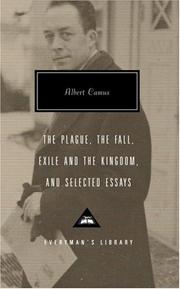
The Plague
Albert Camus · 1913–1960 · Algeria / France
Originally La Peste (French)
Why it matters
Quarantined Oran versus the pestilence: an allegory of Occupation and of every collective catastrophe since, rediscovered by millions in 2020. Camus's answer to the absurd: 'the only way to fight the plague is decency.'
At a glance
Clear chronicle-style prose, though its allegorical layers require reflection.
Deep dive
Why Camus's narrator hides his own identity for almost the entire book, and what that choice is actually arguing about solidarity.
Written for readers who have finished the book. No plot recap, and nothing here is safe to read first.
Themes & symbolism
Oran's plague arrives gradually, dead rats first, then fever cases the town's officials spend weeks refusing to name for what it is, and Camus uses that institutional denial to stage his real subject: how people behave once an absurd, meaningless catastrophe forces them to choose a response anyway. Doctor Rieux treats the sick without any illusion that his effort will be rewarded with a cure or even acknowledged as heroism, and Camus builds Rieux's stubborn, undramatic competence into the novel's closest thing to an answer: not defeating the absurd, which cannot be defeated, but refusing to stop working against it regardless.
Father Paneloux's two sermons chart the novel's most exposed argument. His first sermon interprets the plague as God's deserved punishment on a sinful city; after watching a child die slowly and without any comprehensible justice attached to the suffering, his second sermon retreats to a much harder, less triumphant position, that faith which only makes sense when God's mercy is visible is not faith at all, and true belief must hold even when it explains nothing. Camus, an atheist, stages the child's death specifically to make Paneloux's first sermon impossible to deliver again in good faith.
Jean Tarrou's private code, recorded in the notebooks Rieux draws on throughout, names the plague's real moral stakes: Tarrou has spent his life trying to avoid ever again being, even indirectly, complicit in a death sentence, having grown up watching his father, a prosecutor, argue for executions with the same bureaucratic calm Oran's officials now bring to plague statistics. His goal, he tells Rieux, is simply to become "a saint without God," which for Tarrou means refusing every rationalized form of killing, including the plague's own logic of triage that treats some deaths as acceptable costs.
Rambert's Choice to Stay
Raymond Rambert, a journalist trapped in Oran by the quarantine and separated from the woman he loves in Paris, spends much of the novel arranging an illegal escape through the black market, and Camus treats his desire to leave as entirely reasonable rather than selfish, since Rambert never asked to be caught in Oran's catastrophe. When his escape route finally opens, Rambert chooses to stay and keep working with Rieux's volunteer sanitary squads instead, telling Rieux that leaving now would make him ashamed of a happiness built on turning away from other people's suffering. Camus uses Rambert's reversal, the only major character to actively choose solidarity over an available exit, to argue that decency is a decision remade daily, not a fixed trait some characters simply have and others lack.
The last seal: what actually happens, and why it lands the way it does.
The ending, explained
The plague lifts as arbitrarily as it arrived, the death rate falling for reasons the doctors can no longer control any more than they controlled its rise, and Oran celebrates the reopened gates while Rieux, walking through the crowds, reflects that any joy built on this much loss can only ever be provisional. Tarrou succumbs to the plague in its final days, one of its last victims, just as the ordeal is ending. The novel's last pages reveal that Rieux himself has been the narrator all along, having chosen third person throughout so his own account would carry the same objectivity he gave everyone else's testimony, and he closes by stating plainly that he knows the plague bacillus never actually disappears for good, that it can lie dormant for years waiting to send its rats out again into a city grown complacent, a warning aimed as much at the reader's own moment as at Oran's.