The Fall
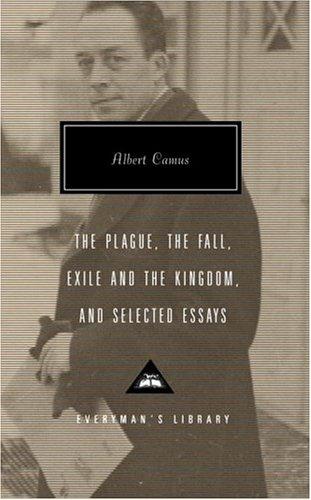
Albert Camus · 1913–1960 · Algeria / France
Originally La Chute (French)
Why it matters
In an Amsterdam bar, a former Parisian lawyer conducts a one-sided confession that slowly becomes the reader's own indictment. Camus's most formally daring book: Sartre, his estranged rival, called it perhaps his finest.
At a glance
A single unbroken dramatic monologue that implicates the reader directly.
Deep dive
A disbarred Amsterdam lawyer's nightly monologue to a stranger in a bar keeps circling one failure on a Paris bridge, and the confession turns out to serve a stranger purpose than absolution.
Written for readers who have finished the book. No plot recap, and nothing here is safe to read first.
Themes & symbolism
Jean-Baptiste Clamence delivers his monologue across several evenings in an Amsterdam bar called Mexico City, returning obsessively to a night years earlier when he passed a young woman standing at the rail of the Pont Royal in Paris and, moments after walking on, heard the sound of a body hitting the water below and kept walking anyway. That single failure to turn back unravels his entire self-image as a successful, admired lawyer devoted to justice, and Camus lets the admission arrive almost casually partway through the book, forcing the reader to reread everything Clamence has already said in its light.
Out of that failure Clamence invents what he calls the role of judge-penitent, confessing his own guilt at length specifically so that his listener, implicated by simple resemblance, has to recognize the same cowardice in himself, since universal guilt is the only fellowship Clamence still believes in. Amsterdam's concentric canals, which he compares directly to the circles of Dante's Inferno, give the novel its geography of descent, a city built in rings that Clamence navigates as though already serving a sentence, self-imposed and endlessly renewable.
The Laugh Clamence Can Never Place
Shortly after the bridge, Clamence begins hearing a mocking laugh behind him with no visible source, on a street, over water, impossible to locate or explain away, and the sound recurs throughout the book as its one genuinely unresolved symbol. Camus never lets Clamence, or the reader, pin the laugh down as conscience, coincidence, or simple auditory hallucination, and that irresolution is deliberate, a stray piece of the absurd lodged inside a novel that otherwise gives its narrator complete, almost suspicious control over his own story.
Written After the Break with Sartre
Camus composed the novel not long after his public rupture with Jean-Paul Sartre and the circle around Les Temps Modernes in 1952, a falling-out over Camus's rejection of Soviet communism that cost him friendships and, in some quarters, his standing as a serious thinker rather than a moralizing celebrity. Critics have long read Clamence's self-lacerating, faintly performative confession as Camus turning the accusation of vanity back on himself before anyone else could level it, a preemptive self-portrait of the successful public man as fraud.
The last seal: what actually happens, and why it lands the way it does.
The ending, explained
Clamence closes his confession by imagining a second chance, being back on the bridge with the same woman poised at the rail, ready this time to jump in and save her. He lets the fantasy play out only long enough to conclude that it's now too late, that the moment has passed and can't be recovered even inside his own daydream, and then adds the word fortunately, revealing that the impossibility is a relief rather than a regret. The whole confession, in other words, has been built to guarantee he never has to risk real virtue again, since a chance forever placed just out of reach lets him keep rehearsing remorse without ever again being tested by an actual, answerable moment.