
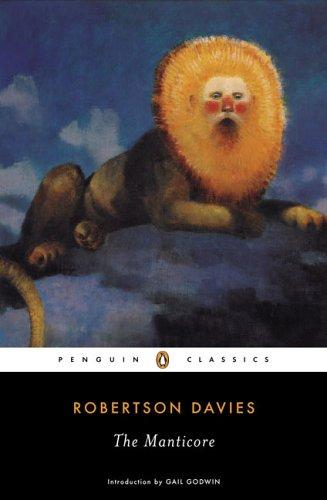
The Manticore
Robertson Davies · 1913–1995 · Canada
Why it matters
The son of Fifth Business's dead tycoon undergoes Jungian analysis in Zurich, unearthing the father he never understood. The second Deptford novel, deepening Davies's fascination with myth, memory, and the examined self.
At a glance
Structured as therapy sessions, dense with Jungian symbolism but clearly narrated.
Deep dive
What David Staunton's Jungian analyst in Zurich is actually asking him to do when she has him imagine the mythical beast that gives the novel its title, and why cross-examining witnesses for a living has left this particular lawyer completely unequipped to examine his own.
Written for readers who have finished the book. No plot recap, and nothing here is safe to read first.
Themes & symbolism
David Staunton, a successful, alcoholic Toronto criminal lawyer, travels to Zurich for Jungian analysis after the death of his father Boy Staunton, the mystery that closed Fifth Business. Davies structures the entire novel as transcribed sessions with Dr. Johanna von Haller, turning therapy itself into narrative technique: David's professional habit of prosecuting and cross-examining is exposed, session by session, as exactly the wrong tool for understanding a life, since a courtroom demands a verdict and a psyche, von Haller keeps showing him, mostly doesn't offer one.
David's memory of his father's death, and of the trial-like inquest that followed it, keeps resurfacing throughout the sessions in slightly different versions, each one revising what David is willing to admit he actually saw or felt at the time. Davies uses that instability deliberately, since a novel built around a lawyer's supposedly reliable recall is most interesting exactly where the recall turns out not to be reliable at all, and von Haller's job is less to correct the record than to notice what David keeps needing to change about it.
The manticore, a beast with a lion's body, a human head, and a scorpion's tail, surfaces in one of David's active-imagination exercises as an image entirely of his own making, and Davies uses it with total literalness as a self-portrait: intellect, the human head, overdeveloped and dominant, riding an appetitive animal body he's spent his life disowning, with a poisoned tail of resentment trailing behind, ready to strike whenever the intellect's guard drops. Davies plays his Jungian apparatus, anima, shadow, persona, not as background theory but as figures David actually meets in recovered memory and imagination, turning the whole novel into a courtroom in reverse, the self cross-examined instead of doing the examining.
Liesl's Cave and the Case Against the Persona
Liesl, the gargoyle-faced woman who runs Magnus Eisengrim's magic show and carries over from Fifth Business, takes David into an actual Swiss cave for a physically and psychologically charged encounter that forces him, for the first time, out of the controlled, persona-managed self his legal career has spent decades perfecting. Davies treats the cave less as symbol than as ambush, a place with no room left for cross-examination.
Davies gives David a courtroom vocabulary for everything, evidence, testimony, verdict, precedent, and Liesl's whole function in the novel is to keep pointing out that none of it applies to a person examining his own life, that the very fluency which makes him formidable in front of a jury is exactly what has kept him from ever cross-examining himself honestly. She isn't gentle about it, and Davies doesn't want her to be; a persona built as carefully as David's doesn't come apart under kindness.
The last seal: what actually happens, and why it lands the way it does.
The ending, explained
By the sessions' close David hasn't received any tidy verdict on his father's death or his own guilt, only a working sense of the manticore as a creature to live alongside rather than prosecute out of existence. Davies ends the analysis with David heading, deliberately unresolved, toward the cave encounter with Liesl that will occupy the trilogy's next turn: not closure, but a widened, less defended sense of who he actually is underneath the lawyer's cross-examining voice he'd mistaken for his whole self.
Where to go next
 Robertson Davies · 1970Fifth BusinessLvl 6Medium pace
 Marilynne Robinson · 2004GileadLvl 5Slow burn
 D. H. Lawrence · 1913Sons and LoversLvl 5Medium pace
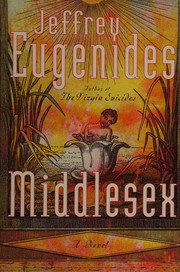 Jeffrey Eugenides · 2002MiddlesexLvl 6Medium pace
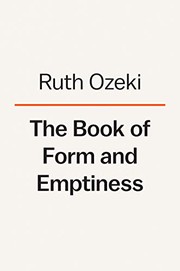 Ruth Ozeki · 2021The Book of Form and EmptinessLvl 5Medium pace
 Saul Bellow · 1964HerzogLvl 7Slow burn