
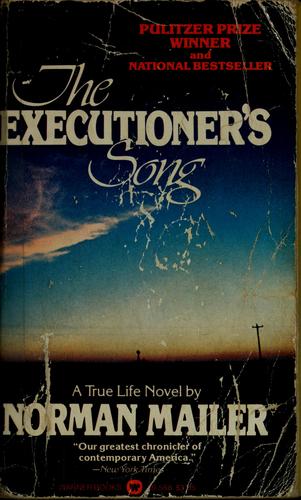
The Executioner's Song
Norman Mailer · 1923–2007 · United States
Why it matters
Mailer spent a thousand pages reconstructing the real case of Gary Gilmore, the first man executed in America after the death penalty's reinstatement, who demanded his own killing proceed. Flat, exhaustive, and morally unresolved, it won the Pulitzer as fiction stripped down to fact.
At a glance
Massive length and flat, reportorial prose sustained across two killings and a trial.
Deep dive
Why Mailer wrote a thousand flat, affectless pages about a killer who wanted to die, and refused to tell readers what to feel about any of it.
Written for readers who have finished the book. No plot recap, and nothing here is safe to read first.
Themes & symbolism
Mailer calls it a "true life novel," and the label is the argument: every scene is reconstructed from interviews, letters, and court documents, yet assembled with a novelist's eye for rhythm and detail, so the book sits deliberately unresolved between journalism's claim to fact and fiction's claim to meaning. Gary Gilmore, paroled after most of his adult life in prison, kills two men in Utah for no motive the book ever manages to fully supply, then demands the state execute him without further appeals — a man asking, in effect, to author his own ending on his own schedule, which is the closest thing to genuine agency anyone in this exhaustively documented story gets to exercise.
The prose itself refuses interpretation: short declarative sentences, minimal metaphor, characters' own flattened idiom reproduced without irony, so that Mailer — a writer notorious for his ego on the page — all but disappears from a book he spent years reporting. That style is the moral position: rather than diagnosing Gilmore as the product of an abusive childhood, a brutalizing prison system, or a violent culture, or condemning the death penalty's return outright, the novel lays the facts of a broken system and a self-destructive man side by side and declines to resolve them into a verdict, forcing the reader to sit in the same discomfort everyone around Gilmore's case had to sit in for months.
Western Voices, Eastern Voices
The novel splits formally into two books — "Western Voices," tracking Gilmore's crimes and Utah's response, and "Eastern Voices," following the New York media apparatus, lawyers, and Larry Schiller's efforts to sell the story's rights before Gilmore is even dead. The split turns the book itself into evidence of its own argument: an execution becomes a commodity almost instantly, packaged and resold by people hundreds of miles from Utah who never meet Gilmore at all, extending the moral culpability for what happens well past the firing squad and into every office that profited from telling the story.
Capote's Shadow
The book inevitably invites comparison to In Cold Blood, but where Capote shaped his killers into tragic, almost novelistic figures, Mailer goes the opposite direction, refusing Gilmore any of that narrative dignity — his crimes stay senseless, his charisma stays real but unearned, and the book never lets empathy curdle into excuse. It's a rebuttal, intentional or not, to the idea that true crime needs a shapely arc to justify its own existence; here the shapelessness is the honesty.
The last seal: what actually happens, and why it lands the way it does.
The ending, explained
Gilmore is executed by firing squad in January 1977 at Utah State Prison, the first execution carried out in the United States after the Supreme Court reinstated the death penalty the previous year, and it happens essentially because he insisted on it — waiving appeals that activists and even his own lawyers tried to keep alive on his behalf. Mailer stages the execution itself with the same flat precision as everything before it, then lingers on the aftermath: the media frenzy, the profiteering, the exhaustion of everyone who spent months attached to Gilmore's case. There's no closing moral about justice or mercy — only the sense that an entire system, and an entire culture's appetite for the story, got exactly what it had been angling for all along.
Where to go next
 Norman Mailer · 1948The Naked and the DeadLvl 6Fast paced
 Bernard Malamud · 1957The AssistantLvl 5Slow burn
 Philip Roth · 1969Portnoy's ComplaintLvl 5Fast paced
 Saul Bellow · 1964HerzogLvl 7Slow burn
 Isaac Bashevis Singer · 1960The Magician of LublinLvl 5Medium pace
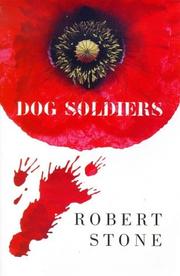 Robert Stone · 1974Dog SoldiersLvl 6Fast paced