
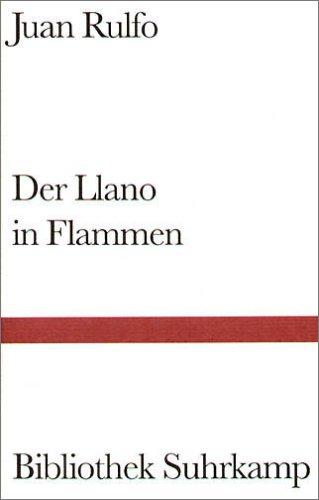
The Burning Plain
Juan Rulfo · 1917–1986 · Mexico
Originally El llano en llamas (Spanish)
Why it matters
Seventeen spare, brutal stories of the Mexican countryside: drought, revenge, and the poverty that outlasts revolutions. Rulfo's stories laid the ground for Pedro Páramo and for a whole continent's fiction.
At a glance
Spare, elliptical prose leaves violence and motive largely unstated between the lines.
Deep dive
How Rulfo's seventeen stories of Jalisco's ruined countryside, failed land reform, and the violence that followed the revolution became the ground Pedro Páramo grew out of.
Written for readers who have finished the book. No plot recap, and nothing here is safe to read first.
Themes & symbolism
Rulfo sets nearly every story in a rural Jalisco stripped of everything a revolution was supposed to deliver: land, water, justice, even the dead's right to stay buried. In They Gave Us the Land, a group of peasants who fought for agrarian reform are handed a stretch of the Llano so parched and cracked that nothing will grow on it, and the story tracks their long, wordless walk across it as the government's promise curdles into a joke with nowhere left to file a complaint. Tell Them Not to Kill Me! runs the failure of justice through one family across thirty-five years: Juvencio Nava, who killed a neighbor in a dispute over pasture decades earlier and has been hiding ever since, is finally caught by a colonel who turns out to be his victim's son, collecting a debt the state never pursued on his own behalf.
Luvina works the same abandonment into pure atmosphere rather than plot: a schoolteacher describes a mountain village so battered by wind and poverty that only old women, children, and the dead seem to actually live there, the men gone to work the coast or simply gone. The story is often read as Rulfo's dry run for Comala, the ghost town of Pedro Páramo he'd write a few years later, and the resemblance is exact: the same wind, the same emptied houses, the same sense of a place that has outlived any reason to keep existing. The title story narrates a guerrilla band's raids from inside the violence of the Cristero years, in the flat, unreflective voice of a man for whom killing stopped requiring justification long before the story starts.
A Book Made of Voices Talking to Someone
Nearly every story in the collection is spoken aloud to somebody inside the fiction rather than narrated to the reader directly: Tell Them Not to Kill Me! is heard by the son about to execute Juvencio, Luvina is told to a stranger over drinks by a teacher who escaped the village, and the title story is a fighter's account given, it's implied, under some kind of later interrogation. Rulfo builds an entire book out of testimony extracted after the fact, which is part of why so little of it resolves into ordinary narrative closure: these are confessions, not reports, and a confession only has to satisfy the person listening.
Land Reform's Punchline
They Gave Us the Land turns Mexico's post-revolutionary land distribution into open satire without raising its voice: the men keep asking a passing official when the good land, the land near the river, will be theirs, and keep being told, correctly by the letter of the law, that they already have it. Rulfo never editorializes. He just lets four men keep walking across ground too dry to plant, which does more damage to the reform's promises than a direct denunciation could have managed.
Where to go next
 Juan Rulfo · 1955Pedro PáramoLvl 7Slow burn
 Gabriel García Márquez · 1967One Hundred Years of SolitudeLvl 6Medium pace
 Elena Garro · 1963Recollections of Things to ComeLvl 7Slow burn
 William Faulkner · 1930As I Lay DyingLvl 9Medium pace
 Toni Morrison · 1987BelovedLvl 8Slow burn
 Carlos Fuentes · 1962The Death of Artemio CruzLvl 8Slow burn