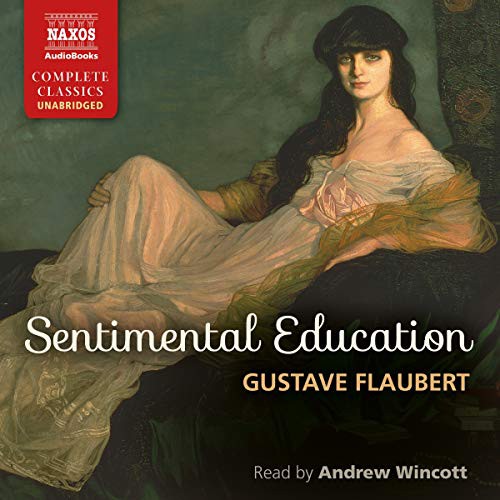
Sentimental Education
Gustave Flaubert · 1821–1880 · France
Originally L'Éducation sentimentale (French)
Why it matters
A generation's political and romantic hopes dissolving across the 1848 revolution: the novel of drift, of history as anticlimax. Kafka reread the last pages endlessly; its deadpan disappointment is the modern novel's secret tone.
At a glance
Deliberately anticlimactic structure and dense historical backdrop of the 1848 revolution.
Deep dive
Why the great romantic passion at the center of this novel produces almost no action at all, set against the backdrop of an actual revolution.
Written for readers who have finished the book. No plot recap, and nothing here is safe to read first.
Themes & symbolism
Frédéric Moreau arrives in Paris with a law degree, inherited money, and vague literary ambitions, and spends the entire novel failing to convert any of it into anything durable, not a career, not a political conviction, not the great love he carries for Madame Arnoux from their first meeting on a river steamer to her final visit to him decades later. Flaubert builds the novel almost entirely out of Frédéric's capacity for intense feeling paired with a near-total incapacity for follow-through, so that his infatuations with Madame Arnoux, the courtesan Rosanette, and the ambitious Madame Dambreuse run in parallel for years without Frédéric ever fully choosing among them or being changed by any of them.
The 1848 Revolution and its aftermath run through the novel as history happening mostly just offstage from Frédéric's own indecision, barricades and street fighting reported by characters who happen to wander near them, Frédéric himself absent from the actual June Days violence because he is off pursuing Rosanette in the countryside. Flaubert's flat, unjudging narration treats Frédéric's personal drift and France's political drift, from revolution to Louis-Napoléon's coup, as versions of the same failure: a generation with the appetite for grand feeling and none of the will to act on it, whether the feeling in question is love or liberty.
Flaubert titled the book an 'éducation,' an education, with open irony: nobody in it learns anything that changes how they live. Frédéric's friend Deslauriers, more calculating and no less unsuccessful, tracks the same arc from a different angle, ambition curdling into cynicism rather than passivity, so that between the two of them Flaubert covers both roads a smart, comfortable young man in 1840s France could take toward accomplishing exactly nothing.
Flaubert's Refusal to Punish or Reward Anyone
Flaubert spent seven years researching and drafting the novel, cross-referencing 1848 newspapers for period accuracy, and deliberately withheld the moral shape readers expected from a novel about a young man's romantic and political education. There is no comeuppance, no late conversion, no scene where Frédéric's failures cost him anything he actually notices losing. Contemporary reviewers, expecting either satire's punishments or romance's rewards, largely found the book cold and plotless on publication; twentieth-century readers, working with different expectations shaped in part by Flaubert's own influence, have tended to read that same flatness as the novel's most modern quality.
The last seal: what actually happens, and why it lands the way it does.
The ending, explained
Years after the main action has passed, Madame Arnoux visits Frédéric one last time, her hair now white, and offers herself to him at last, only for Frédéric to be struck less by desire than by a kind of tender revulsion at how much time has gone by; nothing happens between them beyond a lock of hair given as a keepsake. The novel's actual final scene jumps back further, to Frédéric and Deslauriers as old friends reminiscing about a botched adolescent visit to a brothel decades earlier, when they lost their nerve and ran without spending a coin. Both agree, with real feeling, that it was the best time of their lives. Flaubert closes on that judgment without comment, letting two failed careers and one lifelong unconsummated love collapse quietly into nostalgia for the one moment neither man actually followed through on either.