
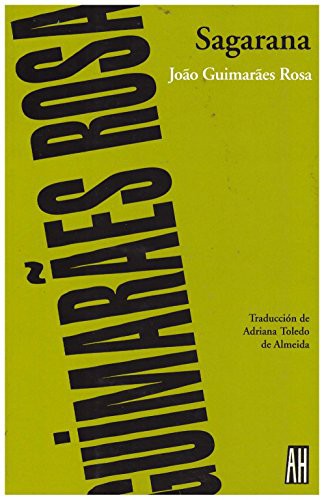
Sagarana
João Guimarães Rosa · 1908–1967 · Brazil
Originally Sagarana (Portuguese) · translated by Harriet de Onís
Why it matters
Nine tales of jagunços, oxen, and duels set in the same backlands Guimarães Rosa would later map in full: his debut collection, and Brazilian regionalism's decisive turn toward invented language and folkloric myth.
At a glance
Invented backlands vocabulary and a dense oral cadence anticipate his later novel's difficulty.
Deep dive
How Guimarães Rosa invents a language for the sertão to tell nine stories that range from a pack animal's patient reading of a cattle drive to a violent rancher's slow climb toward a goodness he once mocked.
Written for readers who have finished the book. No plot recap, and nothing here is safe to read first.
Themes & symbolism
Rosa writes the sertão of Minas Gerais in a Portuguese nobody else was writing in 1946: archaic and biblical constructions sit next to invented compounds, regionalisms drawn from Tupi and old cattle-country speech, and syntax bent until it mimics the rhythm of spoken storytelling rather than the page. The nine stories are held together less by plot than by that language, since Sagarana's real claim is that the backlands have their own grammar, one Rosa had to build new words for because standard Portuguese couldn't carry the weight.
The Little Dust-Brown Donkey follows a cattle drive almost entirely from the perspective of an aging pack donkey, Sete-de-Ouros, whose patient reading of the men and animals around him carries more moral clarity than anything the human drovers say aloud, Rosa's clearest statement that the sertão's wisdom doesn't only live in human mouths. The Time and Turn of Augusto Matraga runs the opposite experiment: a violent, philandering rancher is beaten nearly to death by men he has wronged, survives by accident, and spends the rest of the novella working, with total sincerity, toward a goodness he once would have mocked, until that goodness gets tested by the same kind of violence that nearly killed him.
Neologisms Rosa Built to Order
Rosa coins compounds throughout Sagarana rather than reaching for standard Portuguese: cattle are described in verbs invented for their exact gait, silence gets its own noun, and proverbs are constructed whole rather than quoted from folklore, so the backlands sound self-sufficient, a place that generated its own words because the standard language never had reason to visit. The device is a rehearsal for what Rosa pushes much further in Grande Sertão: Veredas two decades later, but it starts here, tuned to nine shorter, more varied occasions rather than one narrator's unbroken voice.
The Novella Rosa Called the Book's Key
Rosa singled out Augusto Matraga's story as, in his own words, the synthesis and key to everything else in Sagarana, and the claim holds: every other story tests some version of the same question, whether a person shaped entirely by violence and habit can actually become someone else, but only Matraga's story follows that question all the way to a fight he can't survive and wouldn't dodge if he could. The other eight stories test the sertão's texture. This one tests its capacity for grace.
Where to go next
 João Guimarães Rosa · 1956The Devil to Pay in the BacklandsLvl 9Slow burn
 Jorge Amado · 1958Gabriela, Clove and CinnamonLvl 3Fast paced
 Clarice Lispector · 1977The Hour of the StarLvl 7Slow burn
 James Joyce · 1914DublinersLvl 3Slow burn
 Graciliano Ramos · 1938Barren LivesLvl 6Slow burn
 Rachel de Queiroz · 1930The FifteenLvl 3Medium pace