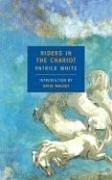
Riders in the Chariot
Patrick White · 1912–1990 · Australia
Why it matters
Four outcasts (a Holocaust survivor, an Aboriginal painter, an eccentric spinster, and a washerwoman) share a mystical vision of Ezekiel's chariot in a hostile Sydney suburb. White's Miles Franklin-winning indictment of Australian conformity and cruelty.
At a glance
Four interwoven consciousnesses and dense visionary symbolism demand sustained attention.
Deep dive
Four residents of a Sydney suburb who almost never meet, each visited privately by the same vision from the Book of Ezekiel, and what their neighbors do to the one among them who is easiest to single out.
Written for readers who have finished the book. No plot recap, and nothing here is safe to read first.
Themes & symbolism
White's four riders share nothing sociologically. Miss Hare is a childlike, half-mad heiress rattling around her dead father's ruined estate, Xanadu; Mordecai Himmelfarb is a German-Jewish scholar and death-camp survivor now sorting parts on a bicycle-lamp factory line; Alf Dubbo is an Aboriginal painter drifting between menial work, drink, and visionary canvases nobody around him values; Ruth Godbold is a laundress raising six daughters after her husband's desertion. What binds them is that each has separately glimpsed Ezekiel's chariot of fire, a vision of divine order none of them can fully explain and none of them needs to, since White is arguing that grace in this book goes looking for the socially invisible rather than the respectable.
Sarsaparilla, White's recurring stand-in for suburban Sydney conformity, supplies the plot's engine of cruelty, and it reserves its worst instinct for whichever rider is easiest to name as other. Himmelfarb's workmates turn a drunken Good Friday joke into a mock crucifixion, stripping and binding him to a tree in a scene that fuses the Passion directly onto the casual antisemitism of an ordinary factory floor. White refuses to let the men involved read as monsters exactly, they are neighbors, mates, people who will later tell themselves it went further than intended, which is precisely what makes the scene indict the suburb rather than a villain in it.
Alf Dubbo's paintings carry the novel's argument about where truth actually lives in a culture with no official use for it. He paints the chariot from memory, in poverty, mostly ignored or patronized when he is noticed at all, and White ties his fate to a bitter, familiar shape: recognition, when it eventually comes, arrives only once he is no longer there to make anything of it.
Good Friday at the Bicycle-Lamp Factory
White times Himmelfarb's ordeal deliberately. The men egging each other on are marking Easter with a drunken re-enactment they half-believe is only theater, binding a Jewish colleague to a tree in a parody of the crucifixion they would recognize instantly if a church were staging it. The horror of the scene is procedural rather than sadistic: nobody present quite decides to do this, it accumulates through dares and beer and the absence of anyone willing to stop it, which is White's harshest point about how ordinary cruelty actually gets organized.
The last seal: what actually happens, and why it lands the way it does.
The ending, explained
Himmelfarb, already unwell, never recovers from the factory ordeal and dies soon after, nursed in his final days by Ruth Godbold, the one rider who reaches another in the flesh rather than only in vision. Miss Hare disappears into the bush around Xanadu at roughly the same time, an exit White leaves deliberately unresolved between death and a kind of dissolution back into the land she has always preferred to people. Alf Dubbo finishes his chariot painting, his best and last work, before dying of tuberculosis in a rented room, and the canvas is found afterward by people with no idea what they are holding. Ruth Godbold alone endures, still taking in other people's washing, still absorbing the suburb's cruelty without being changed by it.