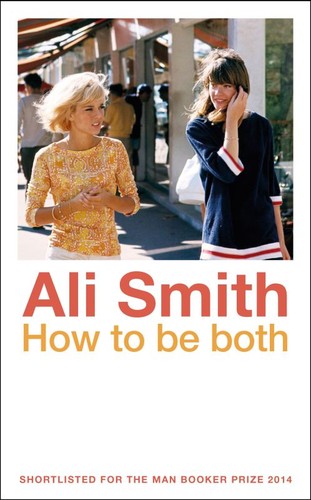
How to Be Both
Ali Smith · b. 1962 · Scotland
Why it matters
A teenage girl mourning her mother and the ghost of a Renaissance painter share one novel printed in two different orders, each reader receiving a different opening half. Smith's most formally daring novel turns gender, grief, and art history into a genuine structural gamble.
At a glance
A dual, shuffled structure and a Renaissance narrator's unfamiliar idiom require attentive rereading.
Deep dive
One novel exists in two different orders depending on which copy a reader happens to pick up, and the pairing it insists on, a grieving teenager and a five-hundred-year-old painter, is really an argument about who gets to be seen clearly across time.
Written for readers who have finished the book. No plot recap, and nothing here is safe to read first.
Themes & symbolism
Smith printed the novel in two editions, one opening with George's contemporary section and one opening with Francesco's Renaissance section, a structural gamble that makes every reader's experience of the book's central pairing genuinely different depending on which half arrives first, and the gimmick works because it enacts the title's own thesis: there is no single correct order in which to understand a life, or a grief, or a painting.
George, a British teenager mourning her mother's sudden death, spends her section returning obsessively to a fresco by the real quattrocento painter Francesco del Cossa that she once visited with her mother in Ferrara, replaying a single afternoon of shared attention as a way of keeping her mother present, and Smith renders that grief with a teenager's exacting, slightly furious precision rather than sentimentality; George corrects people's grammar and interrogates her own memories with the same skeptical rigor.
Francesco's section reveals that the historical painter, long assumed male by art history, is reimagined here as a woman who was raised and lived as a boy from childhood specifically to be permitted an artist's training and a painter's life, and Smith uses that reimagining to build a five-hundred-year echo of George's own struggle: both characters spend their sections looking hard at a world that keeps insisting on categories, male or female, living or dead, that neither of them fits comfortably inside. The 'both' of the title names every one of the novel's doublings at once, two genders, two timelines, two reading orders, two kinds of looking.
The Fresco That Is Actually There
Francesco del Cossa's frescoes at the Palazzo Schifanoia in Ferrara are real and can be visited, and Smith's decision to build the novel's Renaissance half around a documented, extant artwork rather than an invented one gives George's obsessive attention somewhere to land outside the book: a reader can go stand in the same room George and her mother stood in. That grounding in a physical, visitable painting is part of what keeps the novel's more fanciful conceit, a Renaissance ghost narrating consciousness after death, from floating free of consequence.
The last seal: what actually happens, and why it lands the way it does.
The ending, explained
Neither half of the novel supplies a conventional resolution: George's section ends without her grief resolving into acceptance, only into a slightly steadier capacity to keep living inside it, while Francesco's spectral section drifts without ever fully clarifying whether the painter is watching George, remembering a own life, or some blend the novel refuses to specify. Smith's closing move is to let the two timelines' final images, George looking hard at a painting, Francesco having once painted just as hard at the world in front of them, rhyme rather than connect explicitly. The lack of a tidy ending is the point: 'how to be both' was never going to resolve into a single answer any more than grief, gender, or a five-hundred-year-old fresco can be reduced to one legible meaning.