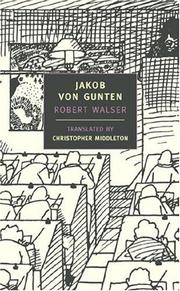
The Assistant
Robert Walser · 1878–1956 · Switzerland
Originally Der Gehülfe (German)
Why it matters
A penniless young clerk takes a post assisting a failing inventor and watches his employer's household slide toward ruin. Walser's tenderest novel of servility, dignity, and quiet economic dread.
At a glance
Deceptively plain sentences that carry sustained irony and unease.
Deep dive
Why Walser's assistant keeps noticing exactly how his employer's business is failing and does almost nothing about it, and what that passivity is actually protecting.
Written for readers who have finished the book. No plot recap, and nothing here is safe to read first.
Themes & symbolism
Joseph Marti arrives at the Villa Zum Abendstern, Evening Star, to assist the inventor Karl Tobler with a string of ventures that never quite work, an advertising clock chief among them, and Walser stages Joseph's entire employment as a study in graceful subordination: he keeps the household's books, tolerates Tobler's mood swings and unpaid wages, and runs errands that grow visibly more desperate as creditors circle, without ever seriously considering simply walking away, because Walser's real subject is not ambition thwarted but the strange dignity available to someone who has made peace with occupying very little space in the world.
Frau Tobler's own frustration, trapped in a marriage to a man whose grandiose schemes are visibly bankrupting the family while he pretends otherwise, gives the novel its second register of quiet endurance. Walser draws the household's slow financial collapse almost entirely through domestic detail, unpaid tradesmen, smaller dinners, children sensing tension they are not told about, rather than through any single dramatic confrontation, so that ruin here arrives the way it actually does, as an accumulation of small withdrawals rather than one catastrophe.
Tobler's other schemes, a mechanized chair for invalids, a vending machine for cartridges at shooting galleries, arrive with the same doomed confidence as the advertising clock, and Walser lets Joseph catalogue each one in the same patient, uninflected prose whether it briefly seems promising or is obviously never going to work, refusing the reader any dramatic tell for which idea is about to fail, since in this household every idea eventually does.
Walser's Aesthetic of Smallness
Joseph's long walks around the lakeside property, his daydreams of quitting that never convert into action, his contentment with being useful rather than significant, all track a value Walser pursued across his whole career and eventually lived out literally: he spent his final decades in a Swiss sanatorium producing almost nothing, walking for hours daily, and was found dead in the snow on one of those walks in 1956, a life that performed, with unsettling precision, the same quiet self-effacement his fiction had spent decades finding beautiful rather than tragic in men like Joseph.
The last seal: what actually happens, and why it lands the way it does.
The ending, explained
Tobler's ventures finally exhaust what little credit and goodwill remain, creditors move to seize the household's remaining property, and the family's status collapses entirely rather than being rescued by any of the inventions Tobler keeps insisting are on the verge of success. Once there is plainly no more work left for him to do and no more wages likely to come, Joseph simply packs his few belongings and leaves the villa on foot, without confrontation, ceremony, or any settling of accounts beyond the practical. Walser refuses Joseph either vindication or catastrophe of his own; the assistant arrived as anonymously as he departs, and the household's ruin, rather than his, is left standing as the novel's actual, unresolved ending.