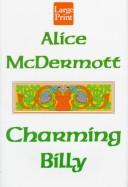
Charming Billy
Alice McDermott · b. 1953 · United States
Why it matters
Mourners at an alcoholic's Irish-American funeral piece together the sentimental legend that sustained his whole beloved, wasted life: a first love lost to tragedy, or so the story always went. McDermott's National Book Award winner is elliptical, communal grief at its most exact.
At a glance
A nonlinear, communally narrated structure withholds its central revelation until well in.
Deep dive
Billy Lynch's funeral gathers a whole Irish-American family around the sentimental story of the sweetheart drink took from him, and McDermott spends the rest of the novel unraveling how much of that story anyone actually agreed to believe.
Written for readers who have finished the book. No plot recap, and nothing here is safe to read first.
Themes & symbolism
McDermott opens at Billy Lynch's funeral lunch, where the assembled family and friends retell, with the fondness of long repetition, the story that supposedly explains Billy's decades of drinking: a doomed young love, Eva, an Irish girl he met and fell for one summer, promised to wed once he'd saved enough money, and lost when word came that she'd fallen ill and passed back in Ireland before he could send for her. McDermott lets the novel sit inside that grief for a while before revealing, through the narrator's cousin Dennis, that the story is a fabrication Dennis himself constructed and maintained for thirty years: Eva didn't fall ill at all, she took another man's money instead of waiting for Billy, and Dennis chose to tell Billy the gentler version rather than let him learn he'd been abandoned for cash.
The novel's real subject is what a family does with a story once it's built a life around it, since Billy's drinking, his devotion to the patient, loving Maeve he eventually marries, his whole self-understanding as a man permanently faithful to a lost love, all rest on a fiction Dennis told to spare him one specific pain and inflicted instead a longer, vaguer one. McDermott's narrator, Dennis's own daughter, pieces the true history together as an adult, and the novel becomes as much about her reckoning with inherited family myth, what gets preserved, what gets quietly edited, as it is about Billy himself.
A Lie Told to Be Kind
Dennis's decision to tell Billy the gentler version rather than the humiliating truth is presented by the family, and for a long time by the novel itself, as an act of mercy, sparing his cousin a specific rejection in favor of a grief with dignity attached to it. McDermott complicates that mercy steadily: a lie built to protect someone from one truth still shapes every subsequent year of his life, and Dennis's kindness reads, the longer the novel sits with it, as much like a convenient story for Dennis himself to tell as a gift freely given to Billy.
Beginning at the Wake, Working Backward
McDermott tells the story almost entirely out of chronological order, beginning at the funeral and circling back through decades of scenes the reader has to actively reassemble, a structure that mirrors exactly how family history actually gets transmitted, in fragments, at gatherings, revised slightly with each new telling. The novel's form argues implicitly that Billy's life was never a straight line toward tragedy so much as a story continually being reconstructed by the people who loved him, which is also, not incidentally, what the novel itself is doing to him.
The last seal: what actually happens, and why it lands the way it does.
The ending, explained
The novel closes back at the funeral repast where it began, but the reader now understands what none of the assembled mourners quite admit to each other: that Billy's decades of drinking were sustained by a story everyone half-suspected wasn't the whole truth, and that his death, from complications of that drinking, is being folded, even at his own funeral, back into the same sentimental narrative that helped kill him. McDermott doesn't resolve the tension between mercy and dishonesty that Dennis's original lie created, she leaves the family telling the comforting version because the comforting version is the one that lets them keep loving Billy without having to sit with how much simpler, harder truths might have changed his life. The narrator's own final clarity, that she now knows the real story and chooses, in that room, not to correct it aloud, becomes the novel's last word on what families actually do with the truth once a story has had thirty years to harden into affection.