
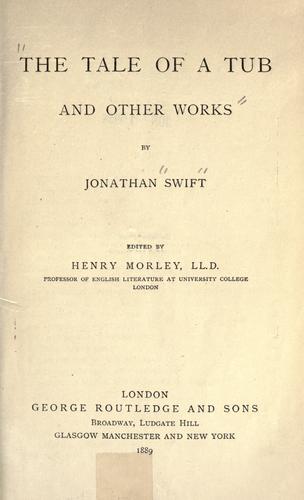
A Tale of a Tub
Jonathan Swift · 1667–1745 · Ireland
Why it matters
A wild, digressive assault on religious extremism and pedantic scholarship, narrated by a hack writer who can't stop interrupting himself. Swift called it his most ingenious work: a warm-up for Gulliver's more famous, more disciplined rage.
At a glance
Willfully digressive, footnote-mad prose parodying scholarship itself.
Deep dive
Why the narrator explaining Christian doctrine through three quarreling brothers keeps interrupting himself to talk about his own genius instead.
Written for readers who have finished the book. No plot recap, and nothing here is safe to read first.
Themes & symbolism
Swift buries his actual allegory, three brothers named Peter, Martin, and Jack inheriting identical coats from their father, along with a will forbidding any alteration to them, inside a mock-treatise delivered by a narrator so vain and so easily distracted that entire chapters go by before the coats reappear at all. The coats stand for Christian doctrine as their father left it; Peter, standing for Roman Catholicism, adds embroidery, gold lace, and elaborate trimmings the will never authorized, twisting its language through absurd legalistic readings to justify each addition, while Jack, standing for the more radical Protestant dissenting sects, tears his coat to shreds trying to strip every ornament Peter added, taking the will's plainness so literally that he destroys the coat's basic fabric doing it.
The narrator's digressions, on madness, on critics, on his own qualifications as a modern author, are not padding around the allegory so much as Swift's real target running in parallel to it: a Grub Street hack convinced his own tangents constitute genius, mistaking every interruption for insight. The Digression on Madness argues, with a straight face Swift clearly does not share, that madness and genius are functionally identical and that civilization runs on lucky lunatics, which reads as much as an indictment of the pamphlet culture producing books exactly like this one as it does actual philosophy.
Martin, standing for a moderate Anglican via media between Peter's excess and Jack's iconoclasm, gets comparatively little narrative attention, which is itself Swift's argument: reasoned moderation makes for duller reading than either corruption or fanaticism, and a culture that rewards the loudest voices will always undersupply the sensible one.
A Tub Thrown to Distract the Whale
Swift's preface explains the title directly: sailors facing a whale that might attack their ship traditionally threw it an empty tub to play with instead, and Swift offers his own digressive, entertaining nonsense as the same kind of decoy, tossed out to distract dangerous freethinkers and political radicals, Hobbes's Leviathan is the whale the joke has in mind, from attacking church and state directly. The joke works two ways at once: Swift is genuinely trying to blunt what he saw as corrosive skepticism, while also admitting, with real cheek, that his own elaborate satire is exactly the kind of empty, diverting tub he claims to be warning readers against.
The last seal: what actually happens, and why it lands the way it does.
The ending, explained
The narrator never resolves the brothers' quarrel or tells readers which coat, if any, is restored to its original state; instead he breaks off the whole treatise citing practical necessity, claiming he must stop writing because his bookseller is waiting and his own genius needs to be rationed out across future volumes he strongly implies he has no real intention of producing. The unfinished, self-interrupting close is the satire's last and most complete joke: a narrator this convinced of his own importance cannot even manage to finish explaining why he matters, proving Swift's point about hack authorship more thoroughly than any direct statement could have.
Where to go next
 Jonathan Swift · 1726Gulliver's TravelsLvl 5Medium pace
 Voltaire · 1759CandideLvl 3Fast paced
 Henry Fielding · 1749Tom JonesLvl 5Fast paced
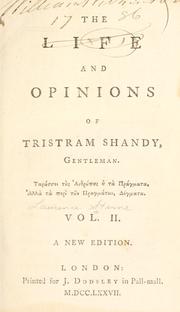 Laurence Sterne · 1759The Life and Opinions of Tristram Shandy, GentlemanLvl 9Slow burn
 Miguel de Cervantes · 1605Don QuixoteLvl 6Medium pace
 Denis Diderot · 1796Jacques the FatalistLvl 6Slow burn