
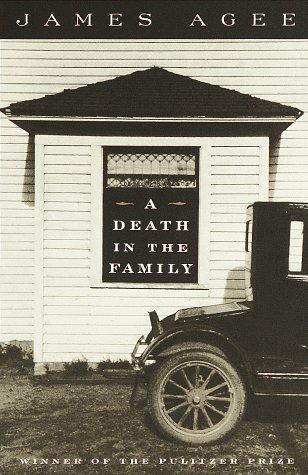
A Death in the Family
James Agee · 1909–1955 · United States
Why it matters
A Knoxville family absorbs the sudden death of its father in a car accident, told in prose as tender and exact as memory itself. Agee died before finishing it; his editor's posthumous assembly still won the Pulitzer.
At a glance
Lyrical, unhurried prose and a fragmented, posthumously assembled structure.
Deep dive
Why a novel about a random car accident opens with a lyric essay about lying in the grass listening to grown-ups talk, and what that ordering is doing to grief.
Written for readers who have finished the book. No plot recap, and nothing here is safe to read first.
Themes & symbolism
The 'Knoxville: Summer, 1915' prologue — a free-standing lyric essay Agee published separately years earlier, later folded into the novel by his editor — sets a prelapsarian calm of families lying on quilts in their yards, listening to streetcars and each other's breathing, before the sudden, causeless death of Jay in a car accident detonates it. That ordering is the book's whole argument about mortality: catastrophe doesn't announce itself or wait for dramatic buildup, it simply arrives inside the middle of an ordinary evening, and the novel's prose stays every bit as tender and exact afterward as before, refusing to let form dramatize what life didn't.
Rufus, closely modeled on Agee himself, absorbs his father's death from underneath rather than through comprehension — he registers the adults' competing theologies (his mother Mary's Catholic faith, his uncle Andrew's fury when a priest withholds full rites because Jay wasn't a believer) as noise circling a hole he can't yet name. The family's argument over what the death means religiously matters less than what it reveals: that grief outruns doctrine, and that a child's uncomprehending grasping toward loss is more honest than any of the adults' explanations.
Agee's sentences carry the same patient, almost devotional attentiveness he'd later bring to documentary work like Let Us Now Praise Famous Men, turned inward on his own family instead of on tenant farmers: the creak of a porch swing, the particular way light falls across a kitchen table, rendered with a reverence that refuses to distinguish between a family's ordinary evening and the catastrophe about to end it. That refusal is the novel's deepest formal argument — that a life's texture, described closely enough, is already an elegy, whether or not anyone in it yet knows what's coming.
An Unfinished Book, Assembled After Its Author
Agee died of a heart attack at forty-five, before completing the manuscript; his editor, David McDowell, assembled the published novel from scattered chapters and drafts, inserting the previously published 'Knoxville' essay as a prologue — a choice scholars have since debated as possibly not matching Agee's own intentions, and later editions have reordered or annotated accordingly. The book's own incompleteness, then, formally echoes its subject: a life, and a text, both cut short mid-sentence and finished by someone else's hand.
The novel won the Pulitzer Prize in 1958, three years after Agee's death, and its reputation has only grown since as critics have come to read its editorial assembly not as a compromise but as oddly fitting: a book about how families keep living around an absence was itself completed by someone standing in for its absent author.
The last seal: what actually happens, and why it lands the way it does.
The ending, explained
There's no plot twist to resolve — the novel closes with the Knoxville family absorbing Jay's death through funeral, ritual, and the ordinary friction of relatives disagreeing over its religious meaning, while Rufus registers his father's absence in a child's uncomprehending, dawning way rather than through any adult framework of loss. Agee, drawing directly on his own father's death in a car accident when he was six, lets the book end elegiacally rather than dramatically: no revelation, no reconciliation scene, just a loving family absorbing an ordinary catastrophe as best it can, which is precisely the point.
Where to go next
 Annie Ernaux · 2008The YearsLvl 6Slow burn
 Wallace Stegner · 1971Angle of ReposeLvl 6Medium pace
 William Maxwell · 1979So Long, See You TomorrowLvl 5Slow burn
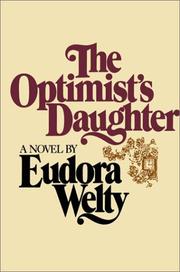 Eudora Welty · 1972The Optimist's DaughterLvl 4Medium pace
 Wright Morris · 1980Plains Song: For Female VoicesLvl 5Slow burn
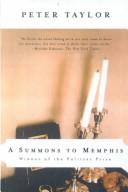 Peter Taylor · 1986A Summons to MemphisLvl 5Slow burn