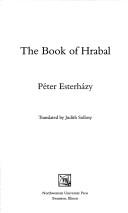
The Book of Hrabal
Péter Esterházy · 1950–2016 · Hungary
Originally Hrabal könyve (Hungarian)
Why it matters
Mrs. Sky, heavily pregnant, converses by turns with God and with the Czech writer Bohumil Hrabal about faith, family, and the absurdities of late-Communist Hungary. Esterházy's playful, theologically restless homage folds one Central European master's voice inside his own.
At a glance
Esterházy's characteristic collage of registers and digressions, compressed into a shorter span than his major novels.
Deep dive
A heavily pregnant Mrs. Sky argues theology with God on one page and literary craft with a real, living Czech novelist on the next, and Esterházy never quite lets the reader decide which conversation she takes more seriously.
Written for readers who have finished the book. No plot recap, and nothing here is safe to read first.
Themes & symbolism
Esterházy builds the novel around Mrs. Sky, pregnant and going about ordinary domestic life in late-Kádár Hungary, carrying on two running dialogues at once: one with God, argumentative, needling, occasionally accusatory about the suffering God allows, and one with Bohumil Hrabal, the actual Czech novelist Esterházy admired, addressed here as a familiar, bantering presence who has simply moved into her household. The two conversations are never ranked against each other; Hrabal's comic, melancholic sensibility gets treated with something close to the same reverence as scripture, literature standing in as a second, equally serious church.
The pregnancy supplies the book's real urgency underneath its playfulness: Mrs. Sky is about to bring a new life into a decaying, absurd late-socialist Hungary, and both conversations become her way of testing whether meaning, religious or literary, is still a resource worth handing forward or merely another comic deflection from a system in visible decline. Esterházy's own restless, collaging sentence style, quoting, interrupting, footnoting itself mid-thought, borrows directly from Hrabal's own technique of turning ordinary chatter into philosophy without the joke ever stopping being a joke.
Borrowing a Living Writer as a Character
Making a real, still-living Czech author a familiar fictional presence inside a Hungarian household was a bolder move than it can look from outside the moment: literary friendship across the Hungary-Czechoslovakia border carried its own quiet significance in the last years of Communist rule, a small, deliberately unofficial solidarity between two national literatures that had no state-sanctioned reason to be in dialogue with each other. Esterházy's tribute reads less like allusion than like an act of literary hospitality, inviting an admired peer to sit at his own family's table.
God as a Sparring Partner, Not a Verdict
Mrs. Sky's exchanges with God never resolve into settled belief or settled doubt; He answers back, deflects, occasionally loses an argument outright, and Esterházy keeps the tone closer to marital bickering than devotional awe. That refusal to let either party win is the book's quiet theological position: faith, like the pregnancy itself, is something carried forward in uncertainty rather than something ever finally proven, and Mrs. Sky's willingness to keep arguing is itself the most serious form her belief takes.