
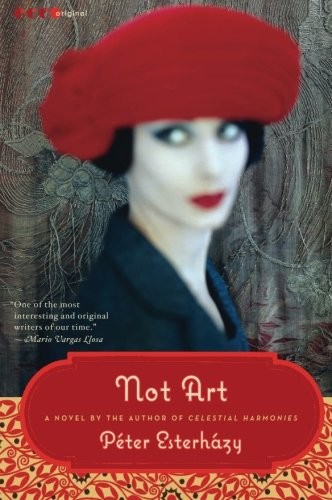
Not Art
Péter Esterházy · 1950–2016 · Hungary
Originally Semmi művészet (Hungarian)
Why it matters
A companion piece to Celestial Harmonies, trained this time on his football-mad mother rather than his compromised father, her devotion to Ferenc Puskás's golden-era team threading memory, myth, and grief. Esterházy at his warmest and most personal.
At a glance
Digressive, essayistic chapters mix football lore with memoir, an easier register than his fragmented major novels.
Deep dive
A companion piece to his father book, except this time the parent in question gave her devotion to a football team, and Esterházy builds decades of family memory around matches Hungary very famously did not win.
Written for readers who have finished the book. No plot recap, and nothing here is safe to read first.
Themes & symbolism
The unnamed narrator, standing in for Esterházy himself, recalls his mother's lifelong devotion to the Aranycsapat, Hungary's Golden Team of the early 1950s led by Ferenc Puskás, weaving match commentary, football lore, and family anecdote into a single continuous, essayistic memory-stream that reads warmer and less fractured than the aphoristic collage of Celestial Harmonies. Where that earlier book anatomized a father's compromised legacy fragment by fragment, this one lets a mother's fandom unspool at something closer to conversational length, digression treated as intimacy rather than evasion.
The Golden Team's years of near-invincibility ended in the 1954 World Cup final loss to West Germany, remembered in Hungary as the Miracle of Bern, a single defeat so disproportionate to the team's dominance that it became a national wound outlasting the players themselves. Esterházy uses his mother's grief over a team whose defining moment was a loss as an emotional register for everything else the family, and the country, lost under Communism without ever being allowed to properly mourn it, love invested in something that couldn't deliver the triumph it had promised, without that love ever reading as wasted.
Puskás himself appears less as a player being profiled than as a kind of household deity, invoked, argued about, and measured against every lesser footballer who follows him, and the mother's running commentary on the game treats his genius as simply a fact of the world rather than a claim needing defense. Esterházy lets that certainty stand mostly unexamined, since the point isn't to relitigate whether Puskás deserved the devotion but to show how completely one woman's capacity for wonder had already been spent on him, and how much that capacity still had left over for everyone else she loved.
The Miracle of Bern as Family Inheritance
The 1954 final loss carried a cultural weight in Hungary disproportionate to a single football match, understood almost immediately as an omen for the country's worsening political fortunes and revisited obsessively in Hungarian culture for decades afterward. Esterházy treats an entire generation's football grief as continuous with, rather than a distraction from, grieving the country's larger fate, so that his mother's decades of retelling the same ninety minutes becomes a private, permissible way of grieving what official language never let her name directly.
The last seal: what actually happens, and why it lands the way it does.
The ending, explained
The book settles, in its final pages, on the narrator's mother in old age, still narrating matches decades gone as though the outcome might yet change, and Esterházy lets that stubborn repetition stand as its own kind of tenderness rather than a symptom to be diagnosed. The son's closing recognition is that his mother's devotion to a fallible, ultimately defeated team quietly modeled the same forgiving love the family would later need to extend to a father revealed as compromised in ways football never was, Not Art choosing reconciliation where Celestial Harmonies had been left to unravel.
Where to go next
 Péter Esterházy · 1984A Little Hungarian PornographyLvl 7Slow burn
 Péter Esterházy · 1990The Book of HrabalLvl 7Slow burn
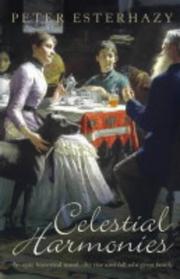 Péter Esterházy · 2000Celestial HarmoniesLvl 8Slow burn
 Magda Szabó · 1987The DoorLvl 5Slow burn
 Péter Nádas · 1986A Book of MemoriesLvl 9Slow burn
 Sándor Márai · 1942EmbersLvl 5Slow burn