
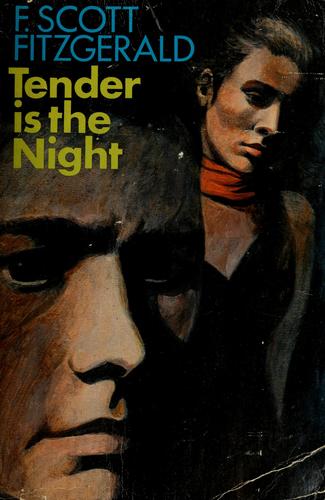
Tender Is the Night
F. Scott Fitzgerald · 1896–1940 · USA
Why it matters
A brilliant psychiatrist dissolves into his marriage on the Riviera: glamour as slow hemorrhage. Fitzgerald's most personal and wounded novel; many who love Gatsby most come to love this one more.
At a glance
A deliberately scrambled timeline complicates otherwise lyrical, controlled prose.
Deep dive
Dick Diver is the golden host of a Riviera summer everyone else remembers as perfect, and Fitzgerald spends the rest of the novel working backward and forward through what all that hosting has quietly been costing him.
Written for readers who have finished the book. No plot recap, and nothing here is safe to read first.
Themes & symbolism
Dick Diver, a brilliant young psychiatrist, marries Nicole Warren, his own patient, whose schizophrenia stems from being raped by her father as a girl. Seen through the star-struck eyes of Rosemary Hoyt, a young Hollywood actress arriving on the Riviera and instantly infatuated with the Divers, the marriage looks like the glamorous center of an entire social world, Dick hosting beach parties with an almost theatrical warmth and generosity. Fitzgerald is building that glamour specifically so he can dismantle it: underneath the hosting is a therapeutic relationship that never actually stopped being one, Dick's authority over Nicole as doctor never converting cleanly into the equality a real marriage requires.
Fitzgerald ties Dick's slow disintegration, worsening drinking, professional carelessness, a diminishing sense of purpose, directly to Nicole's gradual strengthening, as though the two of them are drawing from one shared, finite reserve of vitality and her recovery can only be purchased with his depletion. Nicole's inherited Warren fortune funds the entire Riviera lifestyle, which keeps Dick financially dependent on the very patient he was supposed to be treating, and that dependency quietly strips him of the one thing his authority over her was actually built on: a professional identity increasingly indistinguishable from being kept.
Rosemary's Eyes and the Book Fitzgerald Rewrote
The 1934 published version opens entirely through Rosemary's adoring outsider perspective on the Divers' beach summer, only flashing back in Book Two to explain Nicole's illness and how Dick's marriage actually began, a structure that lets readers fall for the Divers' glamour exactly as Rosemary does before the diagnosis reframes everything already read. After the novel's disappointing reception, Fitzgerald drew up notes for a chronological revision, starting instead with Nicole's abuse and Dick's courtship, which the critic Malcolm Cowley eventually published after Fitzgerald's death. Scholars still argue over which version works better, the original's delayed revelation or the revision's clearer cause and effect, and both remain in print.
Nicole's Case File
Nicole's breakdown, treated by Dick's mentor Dr. Dohmler at a Swiss clinic after her father Devereux Warren's abuse, and Dick's transgression in marrying his own former patient, gives the novel a clinical vocabulary, transference mistaken for love, that Fitzgerald applies without much mercy to his own marriage. Zelda Fitzgerald had been diagnosed with schizophrenia and hospitalized in Switzerland only a few years before this novel was finished, and Dick's slow depletion alongside his wife's uneven recovery reads as Fitzgerald working through real guilt, resentment, and helplessness about his own drinking and his wife's illness, fiction doing the accounting his actual marriage couldn't.
The last seal: what actually happens, and why it lands the way it does.
The ending, explained
Dick's decline accelerates through a series of small, humiliating incidents, a drunken brawl, professional carelessness that costs him his standing, until Nicole, now genuinely recovered and increasingly confident, leaves him for Tommy Barban, a mercenary soldier whose blunt vitality has none of Dick's self-doubt or professional baggage. Fitzgerald refuses Dick any dramatic collapse to match the drama of his earlier hosting. Instead the final pages track him drifting into smaller and smaller upstate New York towns, practicing ordinary medicine, his exact whereabouts eventually uncertain even to Nicole, who hears from him only in occasional letters before those stop too. The novel ends on fade rather than catastrophe, Dick's charisma and promise both simply used up, absorbed into the marriage that made Nicole whole.
Where to go next
 F. Scott Fitzgerald · 1925The Great GatsbyLvl 4Fast paced
 Richard Yates · 1961Revolutionary RoadLvl 4Medium pace
 Joseph Conrad · 1899Heart of DarknessLvl 7Slow burn
 Ford Madox Ford · 1915The Good SoldierLvl 7Slow burn
 William Faulkner · 1930As I Lay DyingLvl 9Medium pace
 Haruki Murakami · 1987Norwegian WoodLvl 3Fast paced