

Pamela
Samuel Richardson · 1689–1761 · England
Why it matters
A servant girl's letters resist her master's advances until virtue is, famously, rewarded with marriage. Often mocked for its moralizing, it nonetheless invented the sustained epistolary novel and made private correspondence a form for showing a mind at work.
At a glance
Simple letter-form prose, though its moralizing repetition can wear thin.
Deep dive
A servant girl fends off her employer's escalating advances in real time, and the letters she writes while doing it are the whole invention.
Written for readers who have finished the book. No plot recap, and nothing here is safe to read first.
Themes & symbolism
Richardson's formal innovation — 'writing to the moment,' letters composed in the immediate aftermath of each assault or near-assault rather than recollected later — is inseparable from the book's moral claim: Pamela's virtue is legible to the reader precisely because we get her unfiltered reactions before she's had time to compose them into anything more calculated, which is also what makes Mr. B's repeated seizure and reading of her letters (he has her private correspondence stolen and copied more than once) feel like a violation nested inside the larger one, an attempt to possess not just her body but her interiority.
Mr. B's campaign against Pamela runs through an escalating catalogue of coercions dressed as courtship — bribery, threatened dismissal, a faked marriage, actual imprisonment at his remote Lincolnshire estate under the eye of the monstrous Mrs. Jewkes, and finally an attempted rape Pamela survives only by fainting at the crucial moment — and Richardson never lets the reader forget that what looks, by volume two, like romance was built entirely on the machinery of a master's near-total power over a servant's body and livelihood. The novel's notorious critics (Fielding chief among them, with Shamela) read exactly this discomfort as unresolved rather than redeemed by the wedding that follows.
'Virtue rewarded,' the novel's own subtitle, is doing double duty: it names Pamela's chastity as the thing that ultimately wins her a fortune and a gentleman husband, but it also quietly concedes that virtue is being treated as a commodity with an exchange rate, held out just long enough to convert a servant into a wife rather than a mistress. Richardson clearly believes he's written a moral fable about resistance; what he's also written, whether he intends it or not, is a case study in how thoroughly economic dependency structures even the language of love.
The Novel That Split English Fiction in Two
Pamela's 1740 publication was an immediate sensation — sermons were preached in its favor, Richardson published a sequel to fend off unauthorized ones, and the book is widely credited with popularizing the sustained epistolary novel as a vehicle for interior psychological realism rather than picaresque incident. Its reception also split eighteenth-century fiction down the middle: Henry Fielding's parody Shamela (1741), which recasts Pamela as a scheming social climber faking her virtue for profit, and his own Joseph Andrews shortly after, effectively founded the comic-realist counter-tradition in direct, open mockery of Richardson's earnest sentimentalism — meaning the English novel's two major early branches both trace back to arguments about whether this one book's heroine should be believed.
The last seal: what actually happens, and why it lands the way it does.
The ending, explained
After the failed rape attempt and Pamela's despairing letters convince even Mr. B that his campaign has curdled into something he can't excuse, he abruptly reverses course, destroys her forged marriage papers, and proposes honestly. Pamela, initially disbelieving, eventually accepts, and the novel's second half becomes an extended performance of her elevation: she wins over Mr. B's snobbish sister Lady Davers, is formally married, and spends the remaining letters demonstrating exactly the humility, gratitude, and moral instruction that justify, in Richardson's terms, why she and not some more calculating woman deserved the reward. The marriage resolves the plot's tension by simply converting Mr. B's power over Pamela from a coercive register into a legally sanctioned one, which is precisely why later readers have found the happy ending less a resolution than a naturalization of the very inequality the letters spent volume one exposing.
Where to go next
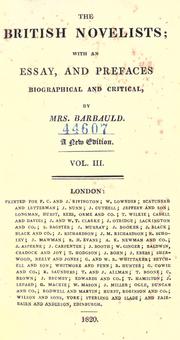 Samuel Richardson · 1748ClarissaLvl 6Slow burn
 Pierre Choderlos de Laclos · 1782Les Liaisons DangereusesLvl 5Medium pace
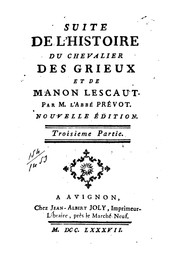 Abbé Prévost · 1731Manon LescautLvl 4Fast paced
 Henry Fielding · 1749Tom JonesLvl 5Fast paced
 Voltaire · 1759CandideLvl 3Fast paced
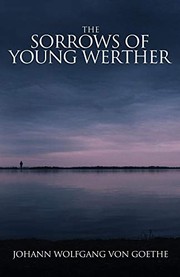 Johann Wolfgang von Goethe · 1774The Sorrows of Young WertherLvl 3Medium pace