

Max Havelaar
Multatuli · 1820–1887 · Netherlands
Originally Max Havelaar (Dutch)
Why it matters
A Dutch colonial administrator's exposé of the exploitation of Javanese coffee farmers, framed by a deliberately chaotic, satirical narrator. The novel credited with shifting Dutch public opinion against colonial abuses.
At a glance
Deliberately chaotic, interrupting narrator scrambles the documentary material.
Deep dive
Why a self-satisfied Amsterdam coffee-broker keeps hijacking a story about colonial injustice in Java, and what happens when the real author finally shoves him out of the way.
Written for readers who have finished the book. No plot recap, and nothing here is safe to read first.
Themes & symbolism
Batavus Droogstoppel, the coffee-broker who supposedly compiles and reluctantly publishes Havelaar's papers, embodies the bourgeois complicity the novel is aimed at: his contempt for anything 'literary,' his obsessive commercial calculation, and his total indifference to the suffering the manuscript describes so long as his own coffee ledgers stay tidy satirize an entire Dutch reading public willing to consume the profits of colonial exploitation while staying comfortably unbothered by its human cost. The nested-narrator structure — Droogstoppel editing a clerk's version of Havelaar's own account, diluted and interrupted at every stage — dramatizes how testimony gets filtered by institutions with no interest in hearing it, the exact mechanism by which Havelaar's superiors handled his original reports.
Havelaar himself is no simple crusading hero: idealistic, digressive, given to self-dramatizing speeches, he remains an administrator of the very colonial system he's indicting, wanting it enforced honestly rather than dismantled outright — an irony that keeps the book from self-congratulation and makes its target the Dutch 'cultivation system' itself, which forced Javanese farmers to grow export crops at the expense of their own subsistence, rather than one corrupt local regent.
Multatuli: "I Have Suffered Much" and a Real Colonial Scandal
The author, Eduard Douwes Dekker, wrote under the pseudonym Multatuli — Latin for roughly "I have suffered much" — a name announcing the book's basis in his own thwarted career. As a Dutch colonial administrator in Lebak, Java, Dekker discovered and tried to formally report exactly the abuses Havelaar uncovers: a local regent extorting and abusing peasants under the tacit protection of the cultivation system, which itself starved the farmers it was supposed to enrich the Netherlands from. His superiors shelved his reports and maneuvered him out of his post rather than address them, ending his career. He wrote the novel in weeks after returning to Europe embittered and financially ruined, and it went on to have a rare, documented historical effect for a novel: it helped shift Dutch public and parliamentary opinion against the worst abuses of the cultivation system, contributing over subsequent decades to reforms and eventually to the Dutch "Ethical Policy" of the early twentieth century — even as colonial rule itself continued for nearly a century after publication. It remains foundational to Dutch literature and, especially since Indonesian independence, is read internationally as an unusually self-implicating document of anti-colonial critique written from inside the colonizing power.
The last seal: what actually happens, and why it lands the way it does.
The ending, explained
Havelaar's attempts to force his superiors to act on the regent's abuses are quietly, bureaucratically smothered — his reports shelved, his standing undermined, his post effectively taken from him rather than the injustice addressed — a deliberately anticlimactic institutional defeat that denies any tidy triumph of justice within the plot. But the novel's true ending isn't Havelaar's story at all: Multatuli, the real author, breaks the fictional frame in its final pages, dismissing Droogstoppel and the whole nested-narrator apparatus to address the King of the Netherlands and the Dutch public directly, demanding accountability for Javanese suffering under a system enriching Holland at their expense. That rupture — fiction abandoning itself for direct political address — is the entire point: a conventionally resolved plot would have let readers close the book feeling justice, however delayed, had been served, whereas Multatuli's fury insists the story isn't over until the Dutch public itself acts, which is exactly the effect the book unusually went on to have.
Where to go next
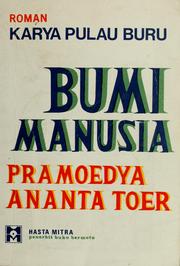 Pramoedya Ananta Toer · 1980This Earth of MankindLvl 4Medium pace
 Anatole France · 1908Penguin IslandLvl 5Medium pace
 Anthony Trollope · 1857Barchester TowersLvl 4Medium pace
 Joseph Conrad · 1899Heart of DarknessLvl 7Slow burn
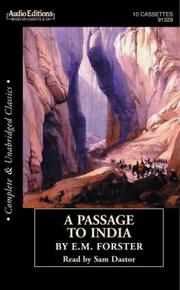 E. M. Forster · 1924A Passage to IndiaLvl 6Medium pace
 William Makepeace Thackeray · 1848Vanity FairLvl 5Medium pace