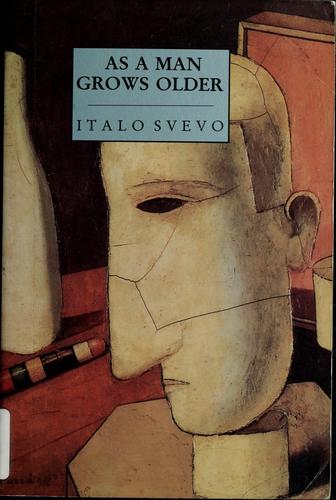
As a Man Grows Older
Italo Svevo · 1861–1928 · Italy
Originally Senilità (Italian)
Why it matters
A middle-aged clerk convinces himself a young mistress is his last chance at feeling alive, and wrecks her, his sister, and himself proving otherwise. Svevo's second ignored novel refined the self-deluding antihero two decades before Zeno's Conscience made him famous.
At a glance
Straightforward chronological narration, though its irony toward its self-deceiving narrator takes attention to catch.
Deep dive
Why the mistress destroying an aging clerk's peace of mind matters far less to Svevo than what his own worship of decline does to the sister quietly holding his household together.
Written for readers who have finished the book. No plot recap, and nothing here is safe to read first.
Themes & symbolism
Emilio Brentani, a minor Triestine writer coasting for two decades on one early novel, decides that Angiolina Zarri, a young woman of easy virtue and no particular interest in him beyond his usefulness, will be his last proof that he is still capable of feeling. Svevo tracks with cold comedy how Emilio needs Angiolina's infidelities almost as much as her attention, since each fresh betrayal lets him restage the drama of a passionate man wronged rather than admit he has simply purchased attention from someone who was never his to lose.
Amalia, Emilio's unmarried sister, has spent years running his household with a devotion he registers only as convenience, and her own quiet, unrequited feeling for Emilio's friend Stefano Balli goes almost entirely unnoticed by a brother too absorbed in narrating his own decline to see hers. Her descent into ether addiction and death is staged as the actual cost of Emilio's self-absorption, a collateral casualty he barely has the self-awareness to grieve properly.
Stefano Balli, Emilio's sculptor friend, effortlessly attracts the same casual admiration and female attention Emilio has to manufacture through constant self-narration, and Svevo lets the contrast sit unremarked rather than pointed out: Balli's real vitality against Emilio's performed version of it is the gap the whole novel is measuring, and it's the book's cruelest small joke that even Amalia's own unspoken longing settles on Balli rather than on any man closer to her own quiet, unglamorous life.
The Antihero Before Svevo Learned to Laugh at Him
Published in 1898 to almost total public indifference, as A Life had been before it, the novel gives Svevo's mature subject, a man narrating his own weakness while mistaking the narration for insight, its second trial run. The crucial difference from Zeno's Conscience two decades later is tone: Zeno's confessions are addressed to an analyst who catches him in his own contradictions, while Emilio's are addressed to no one, which lets his self-deceptions calcify undisturbed for the length of an entire novel.
The last seal: what actually happens, and why it lands the way it does.
The ending, explained
Once Emilio finally forces the confrontation he has been dreading, he catches Angiolina in company that leaves no more room for his preferred version of events, and breaks with her completely, only to discover the rupture brings none of the clarity he expected. Amalia dies not long after, her addiction and its cause barely investigated by a brother too busy nursing his own wound to examine hers properly, and Svevo closes the book years later with Emilio comfortably settled back into bachelor routine, having quietly rewritten both women in memory, Amalia softened into unthreatening sisterly devotion, Angiolina reimagined as a great, tragic love rather than the small, mercenary arrangement it actually was. Self-deception, the ending insists, does not get corrected by consequences; it simply absorbs them and keeps going.