

A Good Man Is Hard to Find
Flannery O'Connor · 1925–1964 · USA
Why it matters
A family's Georgia vacation takes a wrong turn onto a dirt road and into the path of an escaped convict called The Misfit. The title story of the fiercest collection in American literature: comedy and theology sharing one trigger.
At a glance
Sudden violence and theological irony demand alertness beneath plain Southern speech.
Deep dive
O'Connor builds nine Southern set pieces around damaged bodies, con men, and self-satisfied grandmothers, and keeps ambushing her own characters with grace at the exact moment it looks least available.
Written for readers who have finished the book. No plot recap, and nothing here is safe to read first.
Themes & symbolism
O'Connor's characters carry their spiritual condition on their bodies: Hulga Hopewell's wooden leg in 'Good Country People,' Lucynell Crater's deafness and simplicity in 'The Life You Save May Be Your Own,' the shiftless drifters and disfigured strangers who keep turning up at isolated farms. None of this is local color. O'Connor was a devout Catholic writing for what she called an audience that thinks God is dead, and she believed the physically grotesque was the only image sharp enough to make spiritual blindness visible to readers who could no longer see it any other way. A missing leg or a birthmark isn't decoration laid over the story, it's the plainest fact the story has.
Violence in these stories never arrives as punishment in any tidy moral sense, it arrives as the one interruption capable of breaking a character's self-satisfaction open. O'Connor said outright that for readers who are almost blind you have to draw very large and startling figures, and her fiction takes that literally: a family murdered on a back road, a bull goring a landowner who has spent the story despising her tenants, a Bible salesman's theft leaving a proud intellectual stranded in a hayloft. The cruelty is real and O'Connor never softens it, but it's aimed at the exact moment each character is most closed off, which is her definition of where grace has to enter.
The Misfit's Theology
The title story ends with the grandmother's family shot one by one in the Georgia woods by an escaped convict called The Misfit, and the story's real climax isn't the violence but what happens a moment before her own death: reaching out to touch him and calling him 'one of my babies,' the grandmother, vain and manipulative for the whole story, has her one unguarded instant of pure love for another person, seconds before he shoots her three times in the chest. The Misfit's own verdict on her afterward, that she would have been a good woman if somebody had been there to shoot her every minute of her life, states O'Connor's whole aesthetic outright: comfort makes people worse, and only the imminence of death seems to make this particular woman capable of grace.
Manley Pointer and the Nihilism Under the Bible Belt
Hulga Hopewell, a philosophy PhD who has renamed herself out of spite for her mother's sentimental 'Joy,' considers the traveling Bible salesman Manley Pointer easy prey, a rube she plans to seduce and educate in nihilism as a kind of intellectual charity. In the hayloft, Pointer reveals that his Bible is hollowed out to hide whiskey and pornographic playing cards, steals her prosthetic leg, and delivers his own genuine nihilist creed, that he's been believing in nothing since he was born, before abandoning her stranded and legless. O'Connor lets the joke run entirely against Hulga: the con man turns out to be more honestly godless than the philosopher who thought she'd cornered that market.
Where to go next
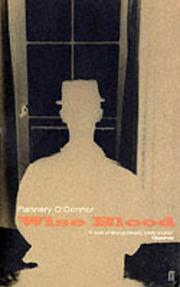 Flannery O'Connor · 1952Wise BloodLvl 6Fast paced
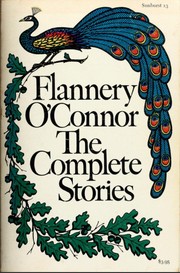 Flannery O'Connor · 1971The Complete StoriesLvl 5Medium pace
 William Faulkner · 1930As I Lay DyingLvl 9Medium pace
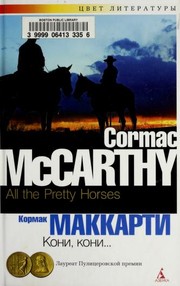 Cormac McCarthy · 1992All the Pretty HorsesLvl 6Medium pace
 Eudora Welty · 1972The Optimist's DaughterLvl 4Medium pace
 Jesmyn Ward · 2017Sing, Unburied, SingLvl 5Medium pace