

Nikolai Leskov
Russia
Vivid, oral, and richly colloquial: skaz narration that lets uneducated narrators tell their own stories in their own voices, folk speech doing the work formal prose usually claims.
Leskov grew up in Oryol province and, unlike most of his literary peers, spent years working as a commercial agent for a British-run estate management firm, traveling deep into the Russian provinces and picking up the dialects, trades, and folk speech that would fill his fiction with a documentary richness no desk-bound novelist could match.
Lady Macbeth of Mtsensk, his most enduring work, follows a merchant's wife whose affair with a hired hand escalates from adultery into a string of casual, appalling murders, narrated in the same vivid, colloquial storytelling voice (skaz) that Leskov made his signature; Shostakovich's opera adaptation was later denounced by Stalin's regime and banned for decades.
An early satirical novel mocking radical nihilists cost him standing with the progressive critics who controlled Russia's literary reputation, and Leskov spent much of his career as a genuine outsider, championed only after his death by Chekhov and Gorky, who recognized in his restless wanderers a folk imagination no one else in Russian prose had captured.
Lines of influence
No descendants recorded, yet.
Their books in the atlas
- 1865
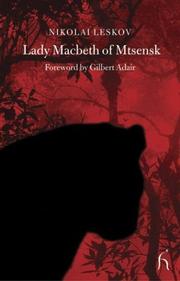 Lady Macbeth of MtsenskLvl 4crime & noir
Meanwhile, elsewhere
 1828–1905Jules VerneFranceWestern Europe · France
 1819–1898Theodor FontaneGermanyWestern Europe · Germany
 1830–1914Paul HeyseGermanyWestern Europe · Germany
 1811–1896Harriet Beecher StoweUnited StatesNorth America · United States
 1832–1910Bjørnstjerne BjørnsonNorwayWestern Europe · Norway
 1819–1891Herman MelvilleUSANorth America · USA
If you like Leskov, try
 1809–1852Nikolai GogolUkraine / Russiashaped Leskov · shared movement: The Russian Golden Age · both write in Russian
 1821–1881Fyodor DostoevskyRussiashared movement: The Russian Golden Age · both shaped by Gogol · kindred genres: tragedy, crime & noir
 1818–1883Ivan TurgenevRussiashared movement: The Russian Golden Age · both shaped by Gogol · both write in Russian
 1799–1837Alexander PushkinRussiashared movement: The Russian Golden Age · influence, once removed · both write in Russian
 1894–1940Isaac BabelRussia / Ukraineboth shaped by Gogol · kindred genres: crime & noir · both write in Russian
 1884–1937Yevgeny ZamyatinRussiaboth shaped by Gogol · both write in Russian · neighboring movements