

Kalidasa
Gupta India
Lyrical and richly figurative, nature imagery woven directly into emotion; verse prized above all for the sheer beauty of its language.
Reliable biographical detail about Kalidasa is scarce even by classical standards, but internal and external evidence points to a poet working at or near the Gupta imperial court, likely in Ujjain, during the empire's cultural high-water mark in the fourth or fifth century CE, thoroughly steeped in the Ramayana and Mahabharata that preceded him.
Shakuntala, formally The Recognition of Shakuntala, dramatizes an episode drawn from the Mahabharata: King Dushyanta falls in love with and secretly marries the hermitage-raised Shakuntala, then forgets her entirely under a sage's curse until a ring recovered from inside a fish restores his memory: a play prized for its lyrical density and its handling of memory, nature, and longing. He also wrote court epics and lyric poetry, including Meghaduta ('The Cloud Messenger'), a lovesick yaksha's message carried by a monsoon cloud.
Kalidasa's Shakuntala reached Europe in an eighteenth-century translation that stunned Goethe, who wrote that it contained 'the flower and fruit of the earthly and heavenly world' in one work; Kalidasa remains, by wide consensus, classical Sanskrit literature's single greatest poet.
Lines of influence
No descendants recorded, yet.
Their books in the atlas
- 400 CE
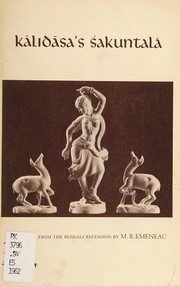 The Recognition of ShakuntalaLvl 5drama
If you like Kalidasa, try
 400–320 BCEValmikiAncient Indiashaped Kalidasa · shared movement: Sanskrit Epic & Drama · both write in Sanskrit
 350–270 BCEVyasaAncient Indiashaped Kalidasa · shared movement: Sanskrit Epic & Drama · both write in Sanskrit
 1876–1938Sarat Chandra ChattopadhyayIndia (Bengal)kindred genres: romance · neighboring movements
 1861–1941Rabindranath TagoreIndia (Bengal)kindred genres: romance, drama · neighboring movements
 1564–1616William ShakespeareEnglandkindred genres: drama, romance
 1785–1873Alessandro ManzoniItalykindred genres: romance