

Joseph Roth
Austria (Galicia)
Stately and nostalgic, formal sentences carrying real tenderness for a lost order, melancholy without ever curdling into bitterness.
Roth left Germany for Paris the day Hitler became chancellor in 1933 and never returned, spending his last years as one of the most visible anti-Nazi voices among the émigré community while supporting himself as a star feuilleton writer for German newspapers. His wife, Friederike, developed schizophrenia in the 1920s and was eventually institutionalized; she would later be murdered under the Nazi euthanasia program, a grief Roth carried through the rest of his itinerant life.
He lived out of hotel rooms by choice and drank in the cafés of Paris with a discipline that matched his prose, mourning a Habsburg empire he had watched dissolve in his own lifetime. The Radetzky March, his elegy for a world of uniforms and loyalty oaths already gone, appeared in 1932; Job, his tender retelling of the biblical story as an immigrant's fable, carried the same grief into a gentler key. He collapsed in a Paris café in 1939 and died days later, not yet forty-five.
Their books in the atlas
- 1930
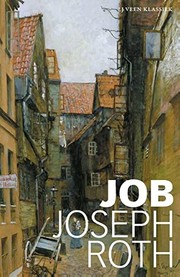 JobLvl 4family saga
 - 1932
 The Radetzky MarchLvl 5family saga
Meanwhile, elsewhere
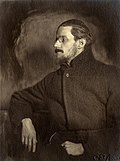 1882–1941James JoyceIrelandWestern Europe · Ireland
 1882–1941Virginia WoolfEnglandWestern Europe · England
 1875–1955Thomas MannGermanyWestern Europe · Germany
 1873–1954ColetteFranceWestern Europe · France
 1869–1951André GideFranceWestern Europe · France
 1879–1970E. M. ForsterEnglandWestern Europe · England
If you like Roth, try
 1881–1942Stefan ZweigAustriashared movement: Mitteleuropa · kindred genres: tragedy · both write in German
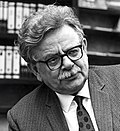 1905–1994Elias CanettiBulgaria / UKshared movement: Mitteleuropa · kindred genres: tragedy · both write in German
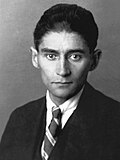 1883–1924Franz KafkaCzechia (Bohemia)shared movement: Mitteleuropa · both write in German · same region & era
 1900–1989Sándor MáraiHungaryshared movement: Mitteleuropa · kindred genres: family saga, historical fiction · same region & era
 1860–1904Anton ChekhovRussiakindred genres: tragedy · neighboring movements · same region & era
 1911–1991Max FrischSwitzerlandboth write in German · neighboring movements