

Pearl S. Buck
United States / China
Plain, unhurried storytelling deliberately modeled on Chinese oral narrative: simple declarative sentences carrying the weight of folk parable.
Buck's missionary parents settled her infancy in Zhenjiang on the Yangtze, where she grew up bilingual, taught Confucian classics by a family tutor alongside her mother's Bible lessons. She returned to Virginia for college at Randolph-Macon, then went back to China, marrying an agricultural economist and settling in Nanjing, where anti-foreign riots in 1927 forced the family into hiding before they fled.
The Good Earth, drawn from two decades of firsthand observation of Chinese peasant life, outsold every other American novel of the 1930s and helped make her the first American woman to win the Nobel Prize in Literature, in 1938. Her daughter Carol's severe intellectual disability, undiagnosable in China, pushed Buck into disability advocacy and, later, into founding one of the first adoption agencies for mixed-race Asian-American children.
She never saw China again; its Communist government refused her a visa decades later, and she died in Vermont in 1973.
Their books in the atlas
- 1931
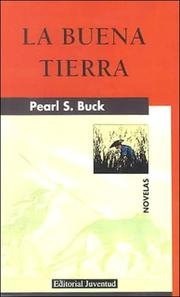 The Good EarthLvl 3family saga
Meanwhile, elsewhere
 1890–1979Jean RhysUnited Kingdom / DominicaWestern Europe · United Kingdom / Dominica
 1891–1974Pär LagerkvistSwedenWestern Europe · Sweden
 1892–1975Ivo AndrićYugoslavia / BosniaRussia & Eastern Europe · Yugoslavia / Bosnia
 1893–1977Miloš CrnjanskiSerbiaRussia & Eastern Europe · Serbia
 1879–1970E. M. ForsterEnglandWestern Europe · England
 1885–1970François MauriacFranceWestern Europe · France
If you like Buck, try
 b. 1950Edward P. JonesUnited Stateskindred genres: family saga, historical fiction · same region & era
 1896–1957Giuseppe Tomasi di LampedusaItalykindred genres: family saga, historical fiction
 1909–1993Wallace StegnerUnited Stateskindred genres: family saga, historical fiction · same region & era
 b. 1952Amy TanUnited Stateskindred genres: family saga, historical fiction · same region & era
 1897–1975Thornton WilderUnited Stateskindred genres: historical fiction, family saga · same region & era
 1873–1947Willa CatherUnited Stateskindred genres: family saga, historical fiction · same region & era