
The Arabian Nights Compilers
Abbasid Caliphate
Nested and digressive, one storyteller's tale opening onto another's: a frame built to defer an ending indefinitely.
The Nights has no author in any ordinary sense: its frame story and earliest core tales trace back to a lost Persian collection, Hazar Afsana ('A Thousand Tales'), translated into Arabic by the ninth century, after which generations of Baghdadi, then later Cairene and Syrian, storytellers and scribes added, dropped, and reworked material across some five centuries of oral and written transmission.
The frame holds it together: Scheherazade, wed to a king who executes each bride after their wedding night, tells him a story every night and breaks off at dawn mid-tale, buying herself another day alive: a structure that let the collection absorb almost anything, from Sinbad's voyages to Aladdin's lamp, the latter two probably later additions with no attested medieval Arabic manuscript source. It reached its familiar large shape only in Egypt around the fourteenth and fifteenth centuries.
Antoine Galland's early eighteenth-century French translation, itself freely embellished, introduced the collection to Europe and reshaped its Western reputation as much as any single Arabic redaction did; it has been retranslated, recompiled, and reinvented ever since.
Lines of influence
No ancestors recorded: a headwater.
Their books in the atlas
- 850 CE
 One Thousand and One NightsLvl 4short story collection
If you like Compilers, try
 1911–2006Naguib MahfouzEgyptshaped by Compilers · both write in Arabic
 b. 1957Alaa Al AswanyEgyptinfluence, once removed · both write in Arabic
 940 CE–1020Abolqasem FerdowsiPersiashared movement: Persian & Arabic Classics
 1145–1221Farid ud-Din AttarPersiashared movement: Persian & Arabic Classics
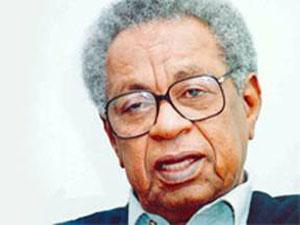 1929–2009Tayeb SalihSudaninfluence, once removed · both write in Arabic
 1697–1763Abbé PrévostFrancekindred genres: romance